
Should You Buy Real or Fake Facebook Likes? A Detailed Comparison
Vietnamese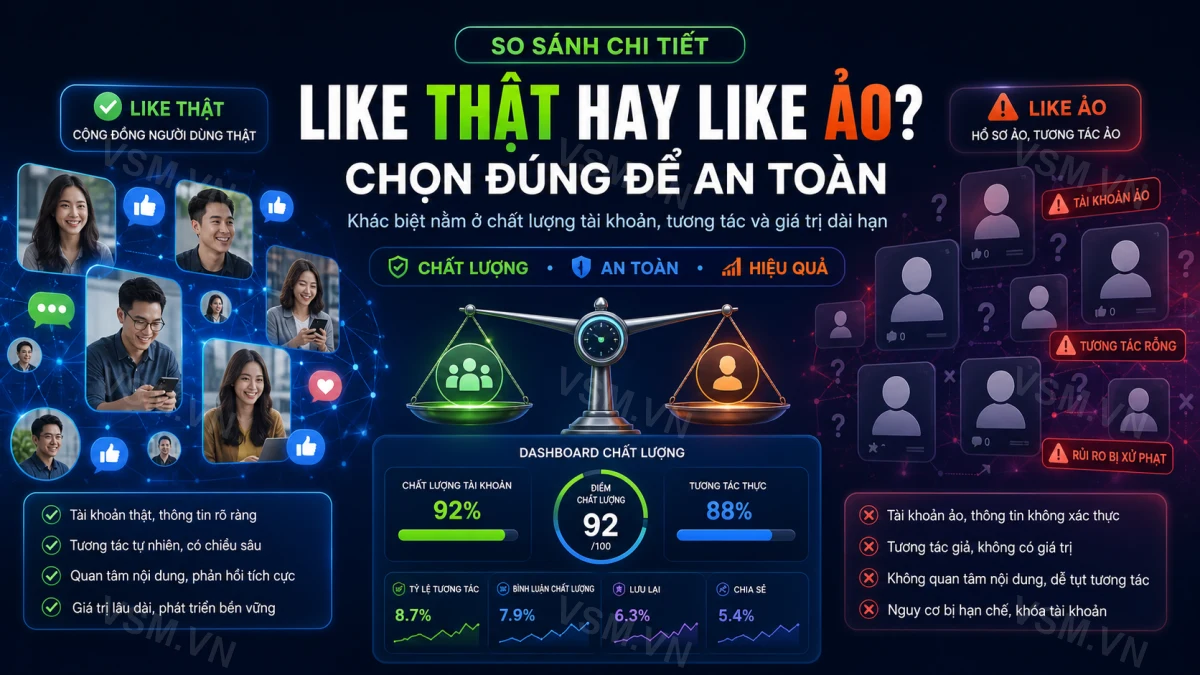
Quick answer: You should definitely buy real Facebook likes. While fake likes offer a cheap, immediate boost, they provide zero engagement and can even trigger Facebook's algorithms, leading to account penalties. Real likes, however, come from genuine users interested in your content, boosting organic reach and potentially increasing your visibility to millions more. Investing in authentic engagement, even if it's just 100 likes, builds long-term value and avoids the risks associated with deceptive practices.
Many shop owners, KOLs, and fanpage admins have faced the same dilemma: should you buy real or fake Facebook likes? The answer isn't simply about picking the cheaper option — it directly affects your account's safety, the long-term value of your engagement, and your brand's credibility on the platform. This article breaks down what separates the two types of likes, weighs their pros and cons, and offers practical advice to help you choose the option that best fits your business goals.
Hundreds of providers now sell Facebook like-boosting services, but quality varies wildly between them. Understanding the real difference between genuine and fake likes will save you from wasting money, help you avoid getting flagged by Facebook, and set your page up for sustainable growth.
What's the Difference Between Real and Fake Facebook Likes?
What Are Real Likes?
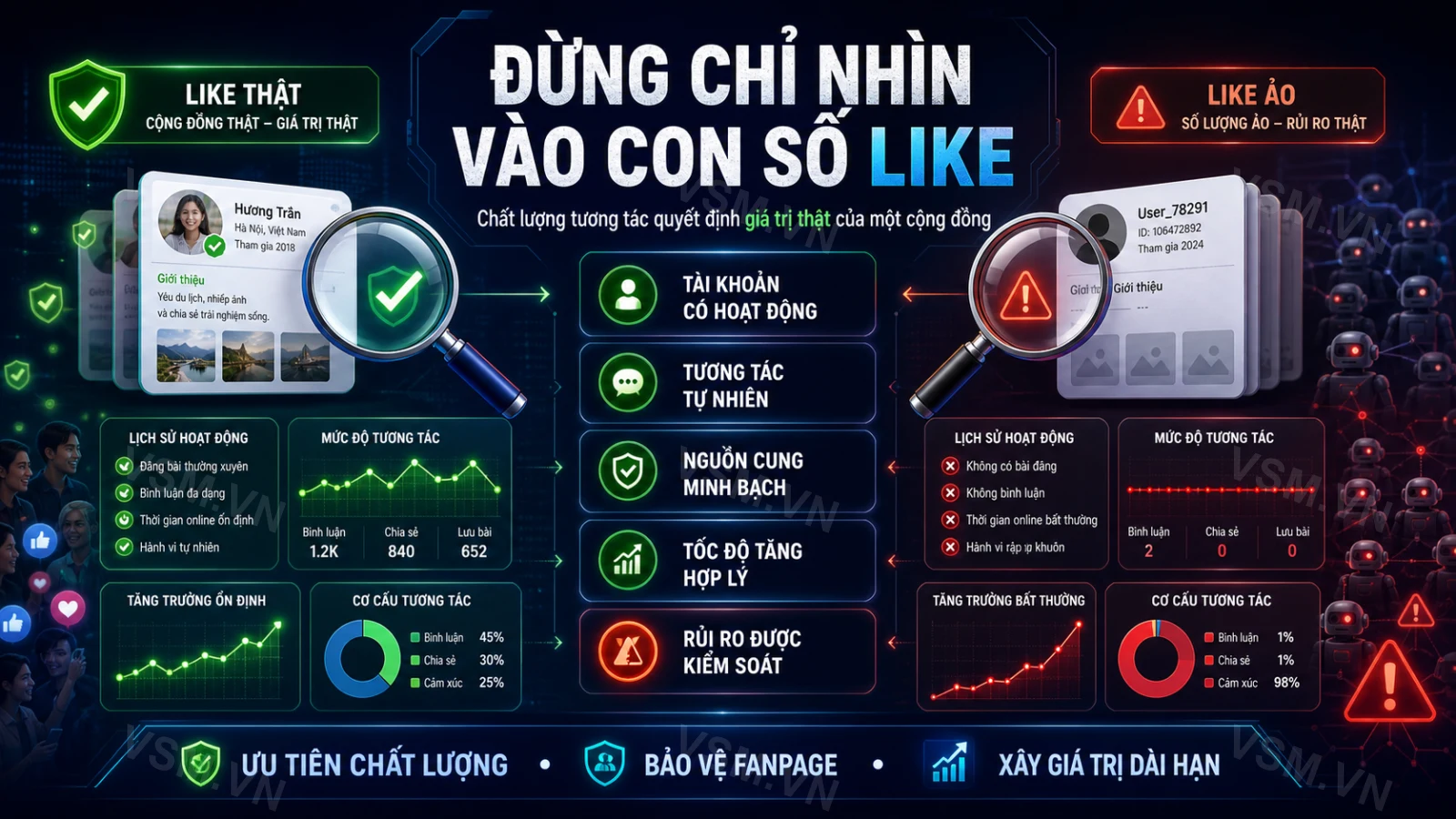
Real likes come from genuine Facebook accounts run by actual people — accounts with an activity history, friends, a profile picture, and natural engagement habits. When you buy real likes, they're placed by users who have a genuine interest in the content and may go on to engage further (commenting, sharing, following) after liking a post. That's why Facebook treats this kind of engagement as high-quality interaction that's rarely touched by its anti-spam systems.
What Are Fake Likes?
Fake likes (also called clone likes or bot likes) come from mass-produced clone accounts with no real activity behind them, typically generated through a shared IP range or automated software that drops likes all at once in a short burst. This type of like boosts your numbers fast and costs very little, but it delivers almost no real engagement value and carries significant risk down the line.
Detailed Comparison: Should You Buy Real or Fake Facebook Likes?
To make the choice easier, here are the most important differences between the two:
- Durability: Real likes rarely disappear because the accounts behind them stay active long-term; fake likes are often swept up and mass-deleted by Facebook within weeks or months.
- Page safety: Real likes don't interfere with the distribution algorithm; fake likes, especially when they spike unnaturally fast, can trigger reduced reach or a spam flag on your page.
- Conversion potential: Real likes come from real users who can become genuine customers; fake likes almost never translate into any business value.
- Cost: Fake likes are significantly cheaper upfront, but when you factor in long-term effectiveness, the cost per genuine interaction with real likes is usually the better deal.
- Transparency: Partners, customers, or brands auditing your page can easily spot fake likes through an unusually low engagement rate relative to the like count.
The Risks of Buying Cheap Fake Facebook Likes
Many people are drawn in by the rock-bottom price of fake likes without weighing the consequences. Common risks include:
- Mass like removal: Facebook periodically sweeps and deletes batches of fake likes, causing your engagement numbers to drop suddenly and damaging your page's credibility.
- Reduced organic reach: once Facebook's algorithm detects an abnormal engagement ratio (lots of likes but very few comments or shares), it lowers how widely your content gets distributed.
- Risk of page restrictions or a full lock: if the system determines your page is engaging in large-scale fraudulent interaction, it may limit features or lock the page entirely.
- Loss of trust from real customers: once visitors notice your like count doesn't match the quality — or quantity — of comments and genuine interaction, they lose confidence in the page.
This is exactly why serious businesses are increasingly prioritizing real engagement, even when the upfront cost is higher.
Why You Should Prioritize Real Likes When Buying Facebook Likes
At its core, a like is just the starting point of a chain of engagement. A single real like can lead to a comment, a share, or a direct message asking about a product — outcomes fake likes can never produce. If your goal is to build a sustainable brand, boost credibility on sales posts, or run more effective ad campaigns, real likes are essentially non-negotiable.
If you're looking for a provider offering quality Facebook like packages sourced from real accounts, prioritize companies with a replacement guarantee, a clear no-bot policy, and delivery paced at a natural speed to avoid tripping Facebook's anomaly detection.
Tips for Buying Facebook Likes Safely and Effectively
Whichever route you choose, keep a few basic safety principles in mind before boosting likes on a post or page:
- Don't push likes too fast in a short window. Facebook constantly monitors for abnormal growth spikes, so spreading the delivery out over time is a much safer approach.
- Choose a provider that's transparent about where the likes come from. Reputable providers are usually upfront about their process and can explain the source clearly, rather than just throwing around vague terms like "authentic likes" or "clone likes."
- Pair like growth with quality content. Likes only deliver their full value when the content itself is compelling enough to hold attention and spark genuine engagement.
- Track your metrics after boosting. If you notice likes dropping unexpectedly or reach falling sharply, pause and re-evaluate your provider.
Beyond boosting likes, maintaining steady engagement matters just as much. For a fuller growth strategy, check out this guide on how to buff Facebook likes safely and effectively to build a more well-rounded engagement plan for your page.
When Should You Use Fake Likes, and When Should You Use Real Likes?
In certain cases, fake likes can still make sense — for example, when the goal is simply to create a temporary crowd effect for a short-term event, with no real concern for durability or conversion. That said, for sales pages, personal brands, or businesses looking to build long-term credibility, real likes remain the far safer and more sustainable choice. Blending both in the right proportion, while prioritizing quality over sheer quantity, tends to deliver the best overall results.
How to Leverage Real Likes for Business Growth
Once you decide to prioritize real likes, it's essential to implement strategies that maximize their potential. Here are some actionable tips:
- Create Compelling Content: High-quality content is crucial in attracting and retaining real likes. Use engaging visuals, informative videos, and relatable stories. For instance, a fashion brand can post styling tips featuring their products, encouraging users to like and share.
- Engage with Your Audience: Respond to comments and messages promptly. This interaction creates a community feeling and encourages more users to like your page. For example, if a user comments on a post asking about product availability, responding quickly can lead to that user liking your page and returning for future interactions.
- Run Contests and Giveaways: Hosting contests that require participants to like your page increases your like count. Ensure the prizes are relevant to your niche to attract genuine followers. An example would be a beauty brand offering a makeup kit to followers who like, share, and tag friends in the post.
- Utilize Facebook Ads: Invest in targeted advertising to reach potential customers. Use ads to promote your posts that already have genuine engagement to amplify their reach. For instance, if a post about a new product gets good engagement, boosting it can attract more real likes.
- Monitor and Adapt: Use Facebook Insights to track which types of content resonate with your audience. Analyze the data regularly and adapt your strategy accordingly, focusing on the content that garners the most engagement.
Measuring the Impact of Real Likes on Your Business
After investing in real likes, measuring their impact on your business is crucial for understanding your return on investment. Here are some key metrics to consider:
- Engagement Rate: Monitor how many likes, comments, and shares your posts receive compared to the number of likes your page has. A high engagement rate indicates that your likes are genuine and interested in your content.
- Lead Generation: Track if the increase in real likes correlates with an uptick in inquiries or sales. Use tools like Facebook Pixel to analyze user behavior on your website after engaging with your Facebook content.
- Brand Sentiment: Keep an eye on the comments and discussions happening on your posts. Positive engagement can indicate that your brand is well-received, while negative comments may highlight areas for improvement.
- Follower Growth: Observe whether your follower count increases alongside your like count. Genuine engagement often leads to more followers, as users who like your content might want to stay updated.
Frequently Asked Questions
Does Facebook detect real likes that were purchased? If the likes are delivered at a natural pace from real accounts, the chance of detection is very low, since the engagement behaves just like that of an ordinary user.
Do fake likes help a post rank higher in the newsfeed? No. Facebook's algorithm prioritizes quality engagement (comments, shares) over raw like counts, so fake likes barely move the needle on reach.
How much does the price differ between real and fake likes? Real likes typically cost more than fake ones because they require a pool of quality accounts, but they make up for it with far greater durability and conversion performance.
Should a newly created page buy likes? It can, but it's best to prioritize a modest number of real likes to build initial credibility, paired with a steady stream of quality content rather than relying on like count alone.
Can buying real likes improve my brand's reputation? Yes, purchasing real likes can enhance your brand's reputation by demonstrating social proof and credibility, leading to higher trust among potential customers.