
Facebook Sales Funnel: How to Build One From A to Z
Vietnamese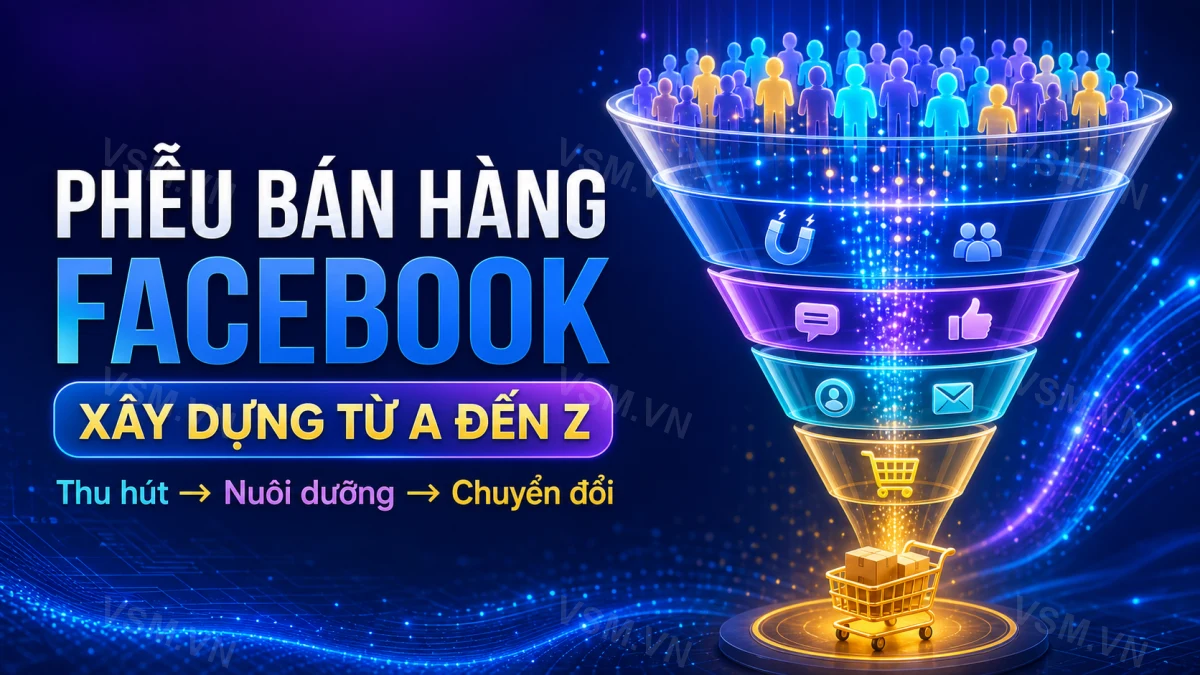
Quick answer: Building a Facebook sales funnel involves a strategic, multi-stage process. It starts with attracting prospects through engaging content and targeted ads, often leveraging a lead magnet. The next step is nurturing these leads, typically over 7-10 days, with valuable information to build trust and demonstrate expertise. Finally, the funnel converts them into customers by presenting a compelling offer, followed by post-purchase engagement to foster loyalty and repeat business.
Plenty of shop owners and small business founders pour money into Facebook ads yet still see orders trickle in, simply because they're selling on a hit-or-miss basis instead of running a structured system that guides customers step by step. That's exactly why a Facebook sales funnel has become a concept every online seller needs to master. A sales funnel isn't a short-term growth hack — it's a way of organizing the entire journey from stranger to loyal customer, helping you optimize ad spend and lift conversion rates sustainably.
In this article, VSM walks you through everything from the basic concept to each practical implementation step, along with the precautions that keep your funnel running smoothly without violating Facebook's policies.
What Is a Facebook Sales Funnel?
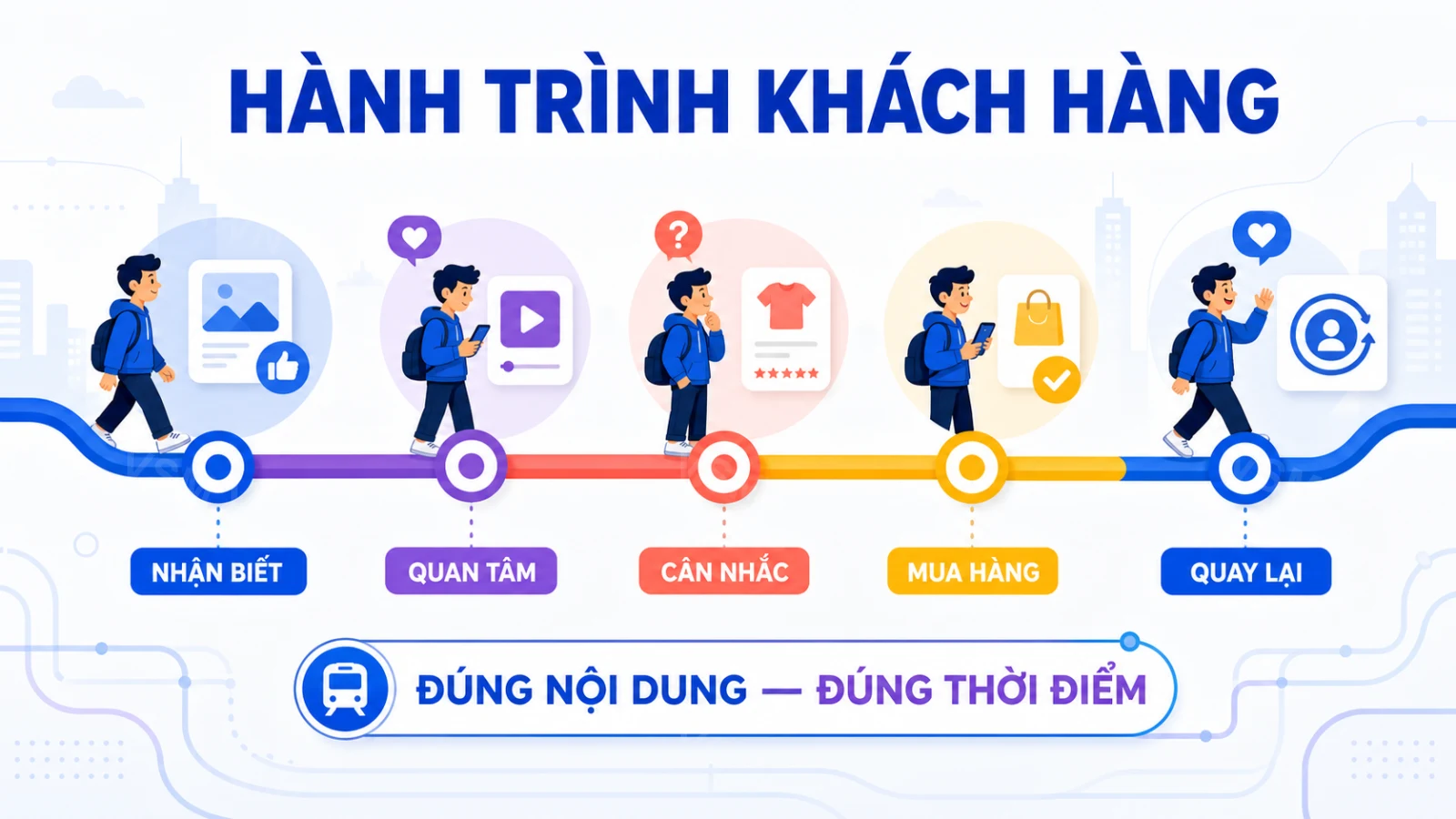
A sales funnel is a model that describes the customer journey through multiple stages, from having never heard of your brand to making a purchase decision and eventually buying again. On Facebook, this funnel is built by combining content, ads, your fanpage, community groups, Messenger, and measurement tools to guide users forward one step at a time, rather than trying to close the sale at the very first touchpoint.
This model works well because most customers don't buy the moment they discover a product — they need time to build trust, compare options, and do their research. A funnel ensures your business doesn't lose this "not-ready-to-buy-yet" segment, by continuing to nurture them with the right content.
Why a Funnel is Crucial for Sustainable Growth
Many businesses fall into the trap of only focusing on immediate sales, which often leads to inconsistent revenue and high customer acquisition costs. A Facebook sales funnel addresses this by:
- Building Brand Awareness: Instead of expecting immediate purchases, it first introduces your brand to a wide audience, establishing recognition and familiarity.
- Nurturing Leads: It provides valuable content that educates potential customers, addressing their pain points and building trust over time. This reduces the pressure on a single ad to convert.
- Optimizing Ad Spend: By segmenting your audience and tailoring messages to their stage in the buying journey, you avoid showing "buy now" ads to people who aren't ready, making your advertising more efficient.
- Increasing Customer Lifetime Value (CLTV): A well-structured funnel doesn't end at the first purchase. It includes strategies to foster loyalty, encourage repeat business, and turn customers into advocates.
- Scalability: Once optimized, a funnel provides a predictable and scalable system for acquiring new customers, allowing businesses to grow their revenue consistently.
The 3-Tier Structure of a Facebook Sales Funnel
Understanding these distinct stages is fundamental to crafting effective strategies for each part of your customer's journey.
Awareness Stage (TOFU – Top of Funnel)
This is the stage where you capture the attention of people who don't yet know your product. Content here is typically useful articles, entertaining videos, eye-catching product photos, or reach/traffic ads targeting a broad audience. The goal isn't to sell right away — it's to build engagement, followers, and initial traffic for your fanpage. Building a solid base of follows and likes at this stage matters a lot, since Facebook's algorithm favors distributing content from pages with healthy engagement; you can check out this guide on how to increase Facebook followers fast and effectively to give the top of your funnel some early momentum.
TOFU Content and Ad Strategies:
- Educational Blog Posts/Articles: Solve common problems related to your niche without directly selling. For example, a skincare brand might post "5 Ways to Combat Oily Skin" instead of "Buy Our Oily Skin Cleanser."
- Entertaining Videos/Reels: Short, engaging videos that capture attention and introduce your brand's personality. Think behind-the-scenes, quick tips, or relatable humor.
- Infographics: Visually appealing data or step-by-step guides that are easy to digest and share.
- Broad Targeting Ads: Use Facebook's interest-based targeting or lookalike audiences (based on website visitors or customer lists) to reach a wide, relevant audience. Focus on objectives like "Reach" or "Brand Awareness."
- Engagement Posts: Ask questions, run polls, or post captivating images to encourage comments, likes, and shares, signaling to Facebook that your content is valuable.
Example: A coffee subscription service might run an ad for a captivating video titled "The Secret History of Your Morning Brew" targeting broad coffee enthusiasts, aiming for video views and page follows, not immediate sales.
Consideration Stage (MOFU – Middle of Funnel)
Once people know who you are, they need more information to build trust: reviews, feedback from past customers, product demo videos, Q&A livestreams, comparison posts, and so on. At this stage, collecting contact information — through forms, Messenger inbox, or comments — for remarketing purposes is a must, since most customers need 3 to 7 touchpoints before making a decision.
MOFU Content and Ad Strategies:
- Product Demo Videos: Show your product in action, highlighting its features and benefits.
- Customer Testimonials/Reviews: Social proof is incredibly powerful. Share screenshots of positive reviews, video testimonials, or case studies.
- Comparison Posts: Position your product against competitors, emphasizing your unique selling propositions.
- Q&A Sessions/Livestreams: Address common questions and concerns directly, building transparency and rapport.
- Lead Generation Ads: Use Facebook Lead Ads to collect email addresses or Messenger conversations to qualify leads. Offer a valuable incentive like a free guide, a discount code for first-time buyers, or a free trial.
- Retargeting Ads: Target users who engaged with your TOFU content (watched a video, visited your page) with MOFU content.
Example: The coffee subscription service would now retarget the video viewers with an ad featuring customer testimonials and a limited-time offer for a "Discovery Box" with a small subscription discount, encouraging sign-ups for their email list or Messenger bot.
Conversion Stage (BOFU – Bottom of Funnel)
This is where deals get closed: running conversion ads, remarketing to people who've already engaged, sending time-limited offers, and following up through Messenger or Zalo to resolve any last-minute hesitation. Once a customer buys, don't stop there — keep nurturing the relationship to turn them into repeat buyers who refer new customers, closing the loop of the funnel.
BOFU Content and Ad Strategies:
- Direct Conversion Ads: Focus on clear calls to action (e.g., "Shop Now," "Buy Now," "Get Your Discount").
- Time-Sensitive Offers/Discounts: Create urgency with flash sales, limited stock alerts, or exclusive bundle deals.
- Abandoned Cart Reminders: For e-commerce, retarget users who added items to their cart but didn't complete the purchase, perhaps with an additional small incentive.
- Live Sales/Product Launches: Generate excitement and drive immediate purchases.
- Messenger/Zalo Follow-ups: Provide personalized support, answer final questions, and overcome objections. This can be automated with chatbots for common queries.
- Post-Purchase Nurturing: Send thank-you messages, ask for reviews, offer loyalty programs, or recommend complementary products to encourage repeat purchases and referrals.
Example: For the coffee service, BOFU ads would target those who signed up for the email list or interacted with the Messenger bot. These ads would showcase specific subscription plans, emphasize the convenience and quality, and offer a strong call to action like "Subscribe Now & Get Your First Bag Free." Post-purchase, they'd send a welcome email, ask for a review after the first delivery, and suggest gifting options around holidays.
Steps to Build a Facebook Sales Funnel From A to Z
Once you understand the structure, here's the practical implementation process VSM recommends for most industries:
- Define your target customer persona: Pin down age, behavior, pain points, and desires so your content and ads reach the right people at the right time.
- Build a solid fanpage foundation: Optimize your profile picture, bio, and product catalog, and make sure you have enough likes/follows to establish initial credibility with visitors.
- Produce content for each funnel stage: Plan separate content for TOFU, MOFU, and BOFU instead of repeatedly posting the same sales pitches.
- Run ads matched to each objective: Use reach/traffic campaigns for TOFU, engagement/lead campaigns for MOFU, and conversion/catalog sales campaigns for BOFU.
- Set up remarketing: Create custom audiences from people who've watched your videos, visited your fanpage, or messaged you without buying, then re-engage them with tailored messaging.
- Measure and keep optimizing: Track the conversion rate at each stage to spot where the bottleneck lies — low engagement, low trust, or an unappealing price — then adjust accordingly.
Detailed Implementation Steps and Best Practices
1. Deep Dive into Customer Persona Definition
This isn't just about demographics. It's about psychographics. What are their aspirations? What keeps them up at night? What other brands do they follow?
- Demographics: Age, gender, location, income, education.
- Psychographics: Interests, hobbies, values, lifestyle, personality traits.
- Behavioral Data: Online habits, preferred social media platforms, purchasing behavior, content consumption.
- Pain Points: What problems do they face that your product solves?
- Goals & Desires: What do they hope to achieve or experience?
- Objections: What concerns might they have about your product or service?
Actionable Tip: Conduct surveys, interviews with existing customers, and analyze Facebook Audience Insights to gather this data. Create 2-3 detailed personas to represent your core audience segments.
2. Optimize Your Facebook Fanpage for Credibility and Conversion
Your fanpage is your storefront on Facebook. It needs to look professional and trustworthy.
- High-Quality Profile Picture & Cover Photo: Use your logo and a compelling visual that represents your brand.
- Compelling "About" Section: Clearly state what your business does, its unique value proposition, and how to contact you. Include a link to your website.
- Call-to-Action Button: Set it to "Shop Now," "Send Message," or "Contact Us" depending on your primary goal.
- Product Catalog/Shop Section: If you sell physical products, integrate your product catalog directly.
- Pinned Post: Pin an important announcement, a popular product, or a compelling offer to the top of your page.
- Reviews Section: Encourage satisfied customers to leave reviews. Positive reviews are crucial for social proof.
Actionable Tip: Aim for at least 100-200 organic likes/follows before heavily investing in ads. This initial credibility makes new visitors more likely to trust your page. Consider leveraging Facebook engagement services for a safe and effective boost if starting from scratch.
3. Craft a Diverse Content Strategy for Each Funnel Stage
Avoid the temptation to only push sales. Each piece of content should serve a specific purpose within the funnel.
- TOFU: Blog posts, infographics, short educational videos, entertaining memes, poll questions. Focus on value, not sales.
- MOFU: Product demo videos, customer testimonials, comparison guides, Q&A livestreams, free webinars, lead magnet offers (e.g., e-book download, exclusive discount code in exchange for email).
- BOFU: Direct product ads, limited-time offers, urgent scarcity messages, abandoned cart reminders, personalized Messenger follow-ups, customer service support.
Actionable Tip: Create a content calendar that maps specific content pieces to each funnel stage and scheduled post dates. Repurpose content across formats (e.g., turn a blog post into an infographic and a short video). Use Facebook's Creator Studio to schedule posts.
4. Align Your Ad Objectives with Funnel Stages
Facebook's ad platform offers various objectives designed for different goals. Using the right one is critical for success.
- TOFU (Awareness): Use "Brand Awareness," "Reach," or "Video Views" objectives. Target broad interests, lookalike audiences, or demographic groups.
- MOFU (Consideration): Use "Traffic," "Engagement," "Lead Generation," or "Messages" objectives. Target custom audiences of people who engaged with your TOFU content (video viewers, page visitors).
- BOFU (Conversion): Use "Conversions," "Catalog Sales," or "Store Traffic" objectives. Target custom audiences of website visitors, abandoned cart users, or leads collected at MOFU.
Actionable Tip: Start with a small budget for each stage and scale up as you see positive results. Continuously A/B test different ad creatives, copy, and calls to action.
5. Master the Art of Remarketing with Custom Audiences
Remarketing is where the magic happens, turning initial interest into sales.
- Website Visitors: Install the Facebook Pixel on your website to track visitors and create custom audiences based on pages they visited or actions they took.
- Video Viewers: Create audiences of people who watched a certain percentage of your videos (e.g., 25%, 50%, 75%).
- Facebook/Instagram Engagers: Target people who engaged with your posts, ads, or visited your profile.
- Customer Lists: Upload email lists of existing customers or leads to create custom audiences for targeted offers or lookalike audiences.
Actionable Tip: Segment your remarketing audiences. Don't show the same ad to someone who watched 25% of a video and someone who added an item to their cart. Tailor the message to their level of intent.
6. Continuous Measurement, Analysis, and Optimization
A funnel is never "set and forget." It requires constant monitoring and adjustment.
- Key Metrics for Each Stage:
- TOFU: Reach, Impressions, Frequency, CPM (Cost Per Mille/1000 Impressions), Video Views, Engagement Rate (likes, comments, shares).
- MOFU: Clicks, CTR (Click-Through Rate), CPC (Cost Per Click), Leads Generated, Cost Per Lead, Messenger Conversations Started.
- BOFU: Conversion Rate, Cost Per Conversion, ROAS (Return On Ad Spend), Purchases, AOV (Average Order Value).
- Identify Bottlenecks: If TOFU reach is high but MOFU clicks are low, your TOFU content isn't compelling enough. If MOFU leads are high but BOFU conversions are low, your sales pitch or offer needs work.
- A/B Testing: Test different ad creatives, headlines, ad copy, calls to action, and audience segments.
- Audience Refinement: Continuously refine your target audiences based on performance data. Exclude non-converters from certain stages to save budget.
Actionable Tip: Use Facebook Ads Manager's reporting tools extensively. Set up custom dashboards to track your most important KPIs at a glance. Schedule weekly or bi-weekly reviews of your funnel performance.
Tools and Techniques to Boost Each Funnel Stage
Beyond content and paid ads, many shops layer in extra tools to keep the funnel running smoothly: auto-reply chatbots for peak hours, comment-management tools so no price inquiry slips through the cracks, and — critically — keeping engagement metrics (likes, follows, comments) at a healthy level so the algorithm favors organic distribution of your posts. This is also why many businesses turn to VSM's Facebook engagement service to safely boost platform activity, giving posts at the awareness stage an initial push instead of relying entirely on ad budget.
Advanced Tools for Funnel Optimization
- Facebook Pixel: Absolutely essential for tracking website activity, creating custom audiences, and optimizing conversion ads. Ensure it's correctly installed and firing for all relevant events (page views, add to cart, purchase).
- Facebook Business Manager: Centralizes all your Facebook assets (pages, ad accounts, pixels, catalogs) for better organization and collaboration.
- Chatbots (e.g., ManyChat, MobileMonkey): Automate Messenger conversations for lead qualification, FAQ answering, sending offers, and even closing sales. They can significantly improve response times and engagement in MOFU and BOFU.
- CRM Integration: Connect your Facebook Lead Ads or Messenger leads directly to your CRM (Customer Relationship Management) system to streamline follow-up and nurture leads outside of Facebook.
- Comment Management Tools: For high-volume pages, tools that help manage and respond to comments efficiently ensure no potential customer is missed. Some even allow for automated replies to specific keywords.
- A/B Testing Software: While Facebook Ads Manager has built-in A/B testing, external tools can offer more sophisticated analysis for complex tests.
- Analytics Dashboards (e.g., Google Data Studio, Tableau): Combine Facebook data with website analytics and other marketing channels for a holistic view of your funnel performance.
Safety Notes When Running a Facebook Sales Funnel
To keep your funnel running sustainably and avoid having Facebook throttle your reach, keep these principles in mind:
- Don't mass-send messages or publish a flurry of promotional posts in a short window — this can easily get flagged as abnormal behavior.
- Grow engagement gradually and naturally; avoid sudden spikes in likes or follows over a short period, which can put your account under Facebook's watch.
- Stay up to date with Facebook's advertising policies, especially for sensitive categories (health, beauty, finance), to avoid ad rejections or account bans.
- Secure your fanpage with clearly defined admin roles and two-factor authentication, so you don't lose control of the page once your funnel has built up a steady customer base.
Adherence to Facebook Policies and Best Practices
Facebook's policies are constantly evolving, and ignorance is not an excuse. Violations can lead to ad rejections, account suspensions, or even permanent bans.
- Prohibited Content: Be aware of content that Facebook strictly prohibits, such as discriminatory practices, illegal products/services, deceptive practices, or infringing on intellectual property.
- Restricted Content: For categories like alcohol, dating, real money gambling, pharmaceuticals, or financial services, there are specific targeting restrictions and disclosure requirements. Always review these carefully.
- Personal Attributes: Avoid language that implies knowledge of a user's personal attributes (e.g., "Are you struggling with debt?"). Instead, focus on the product or service (e.g., "Solutions for managing debt").
- Landing Page Quality: Ensure your landing pages are functional, relevant to the ad, and provide a good user experience. Broken links or misleading content can lead to ad rejections.
- Data Privacy: Be transparent about how you collect and use user data. Ensure compliance with GDPR, CCPA, and other relevant privacy regulations.
Actionable Tip: Regularly review the Facebook Advertising Policies page. If you're unsure about an ad, consult Facebook's support or run a small test campaign to gauge its compliance.
Sales Funnel vs. Direct Sales Ads: A Comparison
Many new business owners skip the funnel entirely and jump straight into "buy now, shock price" ads. This approach can generate quick orders in the short term, but it usually comes with a high cost per order and fails to retain past customers. A sales funnel, by contrast, takes more time to build upfront but gradually lowers ad costs over time, since most later orders come from an audience already familiar with your brand — a segment with a far lower conversion cost than complete strangers.
Why the Funnel Wins in the Long Run
While direct sales ads might seem appealing for their immediate gratification, they often lead to a "feast or famine" cycle. Here's a deeper look at the advantages of a structured sales funnel:
- Lower Customer Acquisition Cost (CAC): By nurturing leads through various stages, you build trust and familiarity. This means when you finally present a sales offer, the audience is pre-qualified and more likely to convert, leading to significantly lower ad spend per acquisition. Direct sales ads often pay a premium for cold audiences.
- Higher Customer Lifetime Value (CLTV): A funnel focuses on building a relationship, not just a transaction. Customers acquired through a funnel are more likely to become repeat buyers, subscribe to your services, and refer others, increasing their overall value to your business.
- Stronger Brand Loyalty: Through consistent, valuable content, your brand becomes a trusted resource. This fosters loyalty that withstands competitive pressures and price wars. Direct sales ads often attract one-time bargain hunters.
- More Predictable Sales: Once optimized, a funnel provides a more stable and predictable flow of leads and sales, making business planning and forecasting much easier.
- Reduced Ad Account Risk: Facebook prefers advertisers who provide value and build genuine engagement. A funnel, with its emphasis on useful content and interaction, aligns better with Facebook's goals, reducing the risk of ad rejections or account issues compared to aggressive, purely promotional ads.
- Better Data for Optimization: Each stage of the funnel provides specific data points. This allows for precise identification of bottlenecks and targeted optimization, rather than just knowing if a "buy now" ad worked or not.
Example: Imagine a clothing brand. Direct sales ads might push a "50% off T-shirts" ad. It might get sales, but those customers might never return. A funnel, however, might start with an engaging video about sustainable fashion (TOFU), then offer a free style guide PDF (MOFU), and finally, present a curated collection with a discount to those who downloaded the guide (BOFU). The latter approach builds a community and repeat customers.
Frequently Asked Questions
How long does it take to see results from a Facebook sales funnel? It typically takes 4 to 8 weeks to gather enough data to optimize your ads and content across all three tiers, depending on your budget and how competitive your industry is.
Do I need to run paid ads to build a funnel? Not necessarily, but paid ads shorten the time it takes to reach the right audience at the awareness stage. With a limited budget, you can compensate by combining organic content with platform engagement boosts.
My fanpage is new with no engagement yet — where should I start the funnel? Prioritize building your like/follow base and awareness-stage content first, then invest budget in conversion ads. This avoids wasting ad spend on a fanpage that hasn't yet established credibility.
How do I know which stage of the funnel is bottlenecked? Track the metrics at each step: if reach is high but engagement is low, the problem lies at the awareness stage; if many people message you but few convert, the bottleneck is at the conversion stage and you need to improve your sales pitch or offers.
Can I use a Facebook sales funnel for B2B businesses? Absolutely! While the content and targeting might differ, the principle remains the same. TOFU could be industry insights, MOFU could be whitepapers or case studies, and BOFU could be a demo request or consultation. LinkedIn might also be integrated into a B2B funnel, but Facebook still offers powerful targeting for professionals.
What's the ideal budget for starting a Facebook sales funnel? There's no one-size-fits-all answer, but a minimum of $5-10 per day per active campaign objective is a good starting point to gather meaningful data. It's often better to start with a smaller budget across multiple stages and scale up successful campaigns.