
How to Increase Domain Authority (DA/DR) for Your Website Effectively
Vietnamese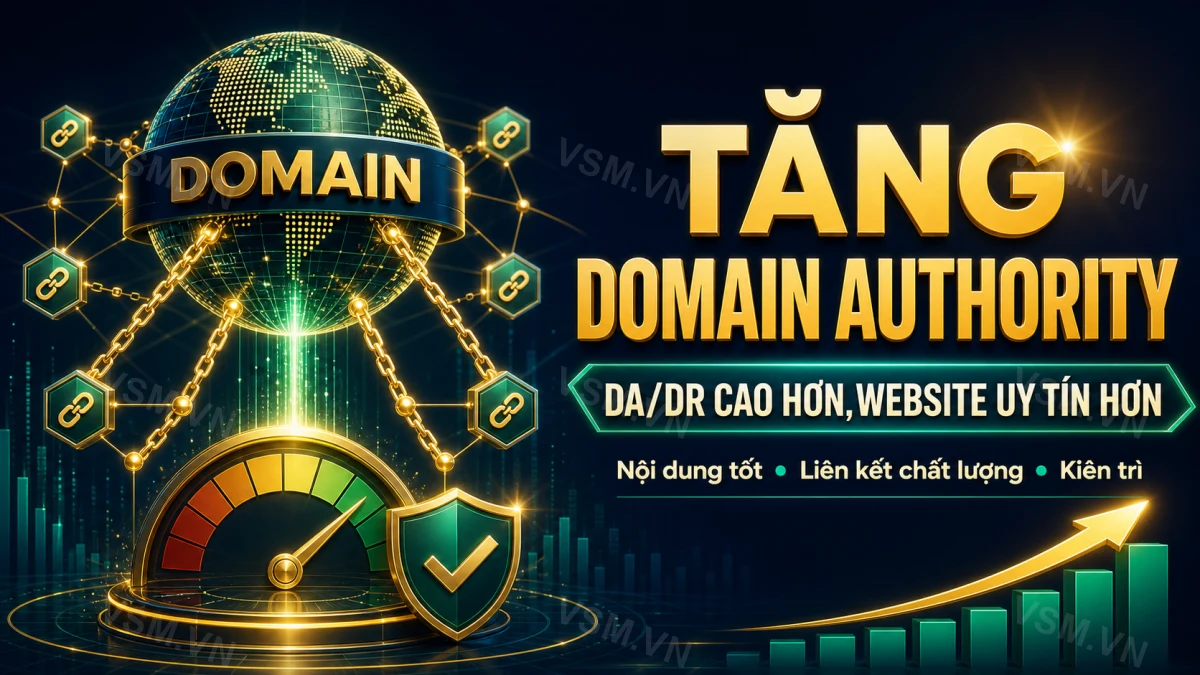
Quick answer: To effectively increase your website's Domain Authority (DA/DR), focus on acquiring high-quality backlinks from reputable, relevant sites. Aim for a diverse backlink profile, prioritizing natural placements over sheer volume. Regularly create valuable, shareable content to attract organic links, and ensure your site's technical SEO is flawless. While DA is a third-party metric, consistent effort over 6-12 months will likely show significant improvement in your site's overall authority and search engine visibility.

Increasing Domain Authority (DA/DR) is a goal shared by most SEOs and website owners, since these two metrics are the most widely used indicators of a domain's overall "strength" in the eyes of search engines. If your website has a low DA/DR, competing for rankings against long-established competitors becomes far more difficult, no matter how good your content is.
Unlike on-page factors that can be optimized within hours, DA/DR is the cumulative result of backlinks, content, domain age, and many other signals building up over time. This article will help you understand what DA/DR really means, the factors that directly influence these scores, and a sustainable, safe roadmap for improving them.
What Are Domain Authority (DA) and Domain Rating (DR)?
Domain Authority (DA) is a metric developed by Moz that predicts how likely a website is to rank on search engine results pages (SERPs), scored on a scale from 1 to 100. Domain Rating (DR) is a similar metric built by Ahrefs, focused mainly on the strength of a domain's backlink profile. Neither metric is an official Google ranking factor, but both closely reflect the level of authority and trust a website has built up over time.
What DA and DR have in common is that both are calculated using machine-learning algorithms that analyze the number, quality, and diversity of domains linking back to a website, then compare those signals against millions of other websites in their databases. Because the calculation methods and data sources differ, the same website can show quite different DA and DR scores — this is completely normal and nothing to worry about.
Understanding the DA/DR Scale
The DA/DR scale is logarithmic, meaning it's much harder to increase your score from 70 to 80 than it is from 20 to 30. This is because, at higher scores, you're competing with the most authoritative websites on the internet. For example, a website with a DA of 20 might only need a few high-quality backlinks to jump to 30, whereas a website with a DA of 70 might need hundreds of exceptional links to reach 75. This logarithmic nature emphasizes the importance of sustained, high-quality effort as your scores climb.
DA vs. DR: Key Differences and Why They Both Matter
While often used interchangeably, it's important to understand the nuances between Moz's DA and Ahrefs' DR. Moz's DA considers over 40 factors, including linking root domains, total number of links, MozRank, MozTrust, and other proprietary data points. It aims to predict overall ranking ability. Ahrefs' DR, on the other hand, is almost exclusively focused on the quantity and quality of a website's backlink profile. It measures the strength of a website's overall backlink profile on a logarithmic scale from 0 to 100.
Because DA takes into account a broader range of factors, it can sometimes fluctuate more based on content updates or technical SEO improvements, even without significant changes in backlinks. DR, being more backlink-centric, tends to be a more stable indicator of your link-building efforts. Using both metrics provides a more holistic view: DR for assessing backlink strength and DA for a broader perspective on overall domain authority.
Why Do DA/DR Matter for Your SEO Strategy?
Although Google doesn't use DA or DR directly as ranking criteria, these two metrics still deliver real practical value for SEOs and business owners:
- They allow you to quickly gauge your website's competitiveness against industry rivals before planning an SEO campaign.
- They serve as a reference point during outreach, guest post exchanges, or backlink purchases, since partners often require a minimum DA/DR to ensure link quality.
- They let you track the effectiveness of a link-building campaign over time, so you can adjust your strategy promptly.
- They indirectly boost brand credibility when partnering with advertisers or pitching to investors.
Strategic Applications of DA/DR in Competitive Analysis
When starting an SEO campaign, one of the first steps is competitive analysis. DA/DR metrics are invaluable here. By analyzing the average DA/DR of the top 10 ranking websites for your target keywords, you can set realistic expectations for your own site. If your competitors consistently have DA/DR scores in the 60s and your site is in the 20s, you know you have a significant authority gap to close. This insight helps you:
- Prioritize keywords: Initially target less competitive keywords where the average DA/DR of ranking sites is closer to your own.
- Benchmark progress: Track your DA/DR against competitors' over time to see if your link-building and content strategies are closing the gap.
- Identify link opportunities: Analyze the backlink profiles of high DA/DR competitors to discover potential link sources you might pursue.
DA/DR as a Trust Signal for Partnerships and Monetization
Beyond direct SEO benefits, high DA/DR scores serve as a powerful trust signal in the digital ecosystem. When approaching potential partners for collaborations, guest posting, or even advertising opportunities, a strong DA/DR signals that your website is credible and influential. This can lead to:
- Better guest post opportunities: High-authority sites are more likely to accept guest posts from domains with respectable DA/DR.
- Higher advertising rates: Advertisers are often willing to pay more for placements on websites with established authority.
- Increased affiliate conversions: Users tend to trust recommendations from websites they perceive as authoritative, potentially leading to better affiliate performance.
Factors That Affect DA/DR
Number and Quality of Backlinks
This is the single strongest factor influencing DA/DR. One backlink from a highly authoritative, industry-relevant website placed naturally within content is worth far more than dozens of backlinks from low-quality or unrelated sites.
The Nuances of Backlink Quality
It's not just about the number of backlinks, but their intrinsic value. A "quality" backlink possesses several characteristics:
- Relevance: The linking domain should be topically relevant to your website. A link from a pet blog to a legal firm website, for instance, would carry little weight.
- Authority of the linking domain: A link from a website with a DA/DR of 70 is significantly more powerful than one from a DA/DR 20 site.
- Placement: In-content links (editorial links) are far more valuable than footer or sidebar links. They signal that your content was genuinely cited.
- Anchor text: Natural, varied anchor text is crucial. Over-optimized exact-match anchor text can be a red flag.
- Uniqueness: A link from a new referring domain is often more impactful than another link from a domain that already links to you.
- Dofollow vs. Nofollow: While dofollow links directly pass "link juice," nofollow links can still drive traffic and brand awareness, and a natural backlink profile includes a mix of both.
Content and Website Structure
In-depth content that's updated regularly and supported by a logical internal linking structure helps search engines understand what your website is about, which in turn increases the odds of earning natural backlinks from outside sources.
The Role of Topical Authority
Beyond individual content pieces, establishing "topical authority" is vital. This means covering a topic comprehensively from all angles, creating a cluster of interlinked content that demonstrates deep expertise. For example, if your site is about digital marketing, you wouldn't just have one article on "SEO." You'd have articles on "keyword research," "on-page SEO," "technical SEO," "link building," "local SEO," "content marketing," all internally linked to each other and to a main "SEO" pillar page. This signals to search engines that your site is a go-to resource for that broad topic, making it more likely to rank for related queries and attract authoritative backlinks.
Domain Age and Operating History
The longer a website has been operating stably, with no history of penalties or repeated ownership changes, the more easily it accumulates authority over time.
Building Trust Over Time
Domain age isn't a factor you can directly control or speed up, but its impact is significant. Older domains that have consistently produced quality content, maintained a clean backlink profile, and avoided penalties naturally accrue more trust with search engines. This "aged authority" is hard-earned and provides a competitive advantage. For newer websites, this means focusing on the other factors diligently to build a strong foundation that will mature gracefully over time.
Technical SEO Signals
Page load speed, mobile-friendliness, HTTPS, sitemaps, and a clear URL structure also indirectly affect how well search engines can crawl and evaluate a website.
The Foundation of Technical Excellence
Technical SEO acts as the backbone of your website. Without a strong technical foundation, even the best content and backlinks might not achieve their full potential. Imagine building a magnificent house on a shaky foundation – it won't stand for long. Key technical elements include:
- Crawlability and Indexability: Ensuring search engine bots can easily access and understand your content through optimized robots.txt, sitemaps, and proper canonicalization.
- Site Speed (Core Web Vitals): Optimizing images, leveraging browser caching, minimizing CSS/JavaScript, and using a CDN to improve page load times. Google's Core Web Vitals are increasingly important ranking factors.
- Mobile-Friendliness: A responsive design that adapts seamlessly to all devices is no longer optional; it's a necessity for good user experience and search rankings.
- HTTPS: Secure websites (using SSL certificates) are a minor ranking factor and provide essential trust for users.
- Structured Data: Implementing schema markup helps search engines better understand your content and can lead to rich snippets in SERPs, improving visibility.
How to Increase Domain Authority (DA/DR) for Your Website Effectively
1. Build a System of Quality Backlinks
This is the most direct and fastest way to move the needle on DA/DR. Prioritize backlinks from highly authoritative, industry-relevant websites placed naturally within the content, rather than mass spamming links. If you don't have the time, staff, or industry relationships to build a proper link profile on your own, consider using a professional backlink building service to shorten the rollout time while keeping your link sources safe and minimizing the risk of Google flagging your site for ranking manipulation.
Actionable Link Building Strategies
- Guest Blogging: Offer to write valuable content for other authoritative websites in your niche. In return, you usually get a backlink in the author bio or within the content. Focus on high-quality sites with strong DA/DR and relevant audiences.
- Broken Link Building: Find broken links on authoritative websites, then create content that would be a suitable replacement for the missing resource. Reach out to the webmaster and suggest your content as a fix.
- Resource Page Link Building: Identify "resource" or "links" pages on relevant sites that curate useful content. If your content is genuinely valuable, suggest it for inclusion.
- Skyscraper Technique: Find the best-performing content in your niche, create something even better and more comprehensive, then reach out to sites linking to the original content to suggest linking to yours instead.
- HARO (Help A Reporter Out): Sign up for HARO and respond to journalist queries relevant to your expertise. If your quote is used, you often receive a backlink from a high-authority news site.
- Competitor Backlink Analysis: Use tools like Ahrefs or Moz to analyze your competitors' backlink profiles. Identify common link sources and strategize how to earn links from those same domains.
- Digital PR: Create compelling, shareable content (e.g., original research, infographics, interactive tools) that naturally attracts media attention and links.
2. Produce In-Depth, Valuable Content
Quality content is a magnet for natural backlinks. Focus on writing in-depth analyses, original data, detailed guides, or real-world case studies — this is exactly the type of content other websites are most likely to cite and link back to.
Developing a Content Strategy for Authority
Your content strategy should be designed not just to rank, but to earn authority. This means:
- Addressing User Intent: Understand what users are truly looking for when they search for a particular keyword. Is it information, a transaction, navigation, or comparison? Tailor your content to perfectly match that intent.
- Creating Evergreen Content: Focus on content that remains relevant over time, requiring minimal updates. These are long-term assets for attracting links and traffic.
- Original Research and Data: Conducting your own surveys, experiments, or data analysis can make your content unique and highly citable, attracting links from news outlets and academic institutions.
- Visual Content: Infographics, videos, and interactive elements can make complex topics more engaging and shareable, increasing their link-earning potential.
- Content Audits: Regularly review your existing content. Update outdated information, improve poorly performing pages, and remove or redirect low-quality content that might be dragging down your site's overall quality perception.
3. Optimize On-Page Technical SEO
Check for and fix technical issues such as broken links, 404 error pages, slow load times, missing meta tags, or unclear heading structure. A technically well-optimized website helps search engines crawl your data more efficiently, creating a solid foundation for your link-building efforts to pay off.
A Technical SEO Checklist for DA/DR Improvement
- Crawl Errors: Regularly check Google Search Console for crawl errors (e.g., 404s, server errors) and fix them promptly.
- XML Sitemaps: Ensure your XML sitemap is up-to-date, includes all important pages, and is submitted to Google Search Console.
- Robots.txt: Verify your robots.txt file isn't blocking important pages from being crawled.
- Site Speed Optimization: Use tools like Google PageSpeed Insights to identify and fix performance bottlenecks. Implement lazy loading for images, compress files, and use efficient coding practices.
- Mobile Responsiveness: Use Google's Mobile-Friendly Test to ensure your site renders correctly and offers a good user experience on all devices.
- HTTPS: Migrate to HTTPS if you haven't already.
- Internal Linking: Develop a strategic internal linking structure that distributes link equity across your site and helps users and search engines discover related content. Use descriptive anchor text.
- Canonicalization: Prevent duplicate content issues by using canonical tags to indicate the preferred version of a page.
- Structured Data Markup: Implement relevant schema markup (e.g., Article, Product, FAQPage) to enhance your visibility in SERPs.
4. Build a Long-Term, Comprehensive SEO Strategy
Increasing DA/DR isn't a standalone campaign — it needs to fit within the bigger SEO picture, combining content, technical optimization, link building, and user experience. For a fuller understanding of this roadmap, check out our comprehensive SEO guide to build a structured plan instead of tackling each piece in isolation.
Integrating DA/DR into Your Holistic SEO Plan
A truly effective SEO strategy views DA/DR improvement as a natural outcome of overall website excellence, rather than an isolated goal. This involves:
- Keyword Research & Content Mapping: Align your content creation with relevant keywords, understanding both user intent and the competitive landscape (including competitor DA/DR).
- User Experience (UX) Optimization: A good UX (easy navigation, fast loading, mobile-friendliness, clear calls to action) leads to lower bounce rates and higher engagement, which Google interprets as positive signals, indirectly boosting authority.
- Brand Building: A strong brand presence, both online and offline, naturally attracts mentions and links. This includes social media engagement, PR efforts, and consistent brand messaging.
- Analytics & Monitoring: Regularly track your DA/DR, organic traffic, keyword rankings, and backlink profile using tools like Google Analytics, Search Console, Ahrefs, and Moz. This data informs your ongoing strategy adjustments.
- Adaptability: The SEO landscape is constantly evolving. Be prepared to adapt your strategy based on algorithm updates, new technologies, and changes in user behavior.
Risks and Mistakes to Avoid When Increasing DA/DR
Not every method of boosting your score is safe for your website in the long run. Some common mistakes that can backfire — and even trigger a Google penalty — include:
- Buying large volumes of backlinks from low-quality, unnatural PBN (Private Blog Network) networks.
- Placing a burst of backlinks in a short period with duplicate anchor text, making your link profile look suspicious.
- Using backlinks from websites with policy-violating content (gambling, adult) that's unrelated to your niche.
- Ignoring content entirely and focusing only on backlinks, leaving your website "link-heavy but value-light."
DA/DR also doesn't rise immediately after you earn new backlinks, since tools like Moz and Ahrefs need time to refresh their data (typically a few weeks to a few months). So be patient, monitor progress with reputable SEO tools, and evaluate the trend rather than fixating on a single snapshot number.
Understanding Google Penalties and How to Avoid Them
Google's algorithms are sophisticated and constantly evolving to detect manipulative SEO practices. Engaging in "black hat" tactics, particularly concerning link building, can lead to severe penalties that decimate your organic traffic and reputation. These penalties can be:
- Algorithmic Penalties: Automatically triggered by Google's algorithms (e.g., Penguin update targeting spammy links). Recovery often involves disavowing bad links and waiting for the next algorithm refresh.
- Manual Penalties: Issued by a human reviewer at Google, often after a spam report. You'll receive a notification in Google Search Console, and recovery requires fixing the issue and submitting a reconsideration request.
To avoid these, always adhere to Google's Webmaster Guidelines. Focus on earning links naturally through valuable content and genuine outreach. If you engage in any form of link acquisition, ensure it's white-hat, transparent, and provides real value to users.
The Importance of a Natural Link Profile
Google aims to reward websites that naturally earn links because they provide excellent content and user experience. An "unnatural" link profile is a major red flag. What makes a link profile unnatural?
- Sudden spikes in links: A sudden, massive influx of backlinks, especially from low-quality sources, looks suspicious.
- Over-optimized anchor text: Repeatedly using the exact same keyword-rich anchor text for many links. A natural profile has diverse anchor text, including brand names, "click here," "read more," and naked URLs.
- Irrelevant links: Links from websites completely unrelated to your niche.
- Links from spammy sources: PBNs, comment spam, forum spam, link directories of low quality.
- Links from foreign language sites: Unless your site genuinely targets international audiences in multiple languages, a sudden burst of links from non-English sites can be a red flag.
The goal is to build a link profile that looks like it grew organically, through genuine interest and citations from other webmasters.
Monitoring and Patience: The Long Game of Authority
Improving DA/DR is a marathon, not a sprint. Significant changes rarely happen overnight. It requires consistent effort over months, sometimes even years. Here's how to approach monitoring and maintain patience:
- Regularly check your DA/DR: Use Moz and Ahrefs to track your scores, but don't obsess over daily fluctuations. Look for upward trends over weeks and months.
- Analyze referring domains: Focus on the number of unique referring domains rather than just the total number of links. Each new referring domain is a strong signal of authority.
- Track keyword rankings: Ultimately, DA/DR is a proxy for ranking potential. Monitor your target keyword rankings to see if your efforts are translating into improved visibility.
- Review Google Search Console: Keep an eye on your search performance, index coverage, and any manual actions.
- Competitor analysis: Continue to monitor your top competitors' DA/DR and backlink profiles to stay informed and identify new opportunities.
Patience is paramount. Google's algorithms take time to discover new links, evaluate their quality, and adjust your site's perceived authority. Stick to white-hat practices, focus on long-term value, and the rewards will come.
Frequently Asked Questions
What's the difference between DA and DR? DA is developed by Moz and evaluates a website's overall ranking potential based on multiple signals; DR is developed by Ahrefs and focuses mainly on the strength of the backlink profile. Both use a 1-100 scale, but because the calculation methods differ, the scores are usually not the same.
How long does it take to increase DA/DR? It typically takes 3 to 6 months to see a noticeable change, depending on the speed and quality of the backlinks you build, as well as how competitive your industry is.
Does a high DA/DR guarantee a top Google ranking? Not entirely. DA/DR is only a reference metric for authority, while actual Google rankings also depend on many other factors such as content relevance, user experience, and search intent.
Should I buy cheap backlinks to boost DA/DR quickly? No. Cheap, high-volume backlinks usually come from low-quality sources, which can easily get your website flagged as spam by Google and hurt your rankings in the long run. Prioritize quality over quantity.
Can a low DA/DR site still rank well? Yes, absolutely. For very specific, low-competition keywords or local searches, a site with lower DA/DR can still rank well if its content is highly relevant and optimized. However, for broader, more competitive terms, a higher DA/DR provides a significant advantage.
Is it possible for my DA/DR to decrease? Yes. Your DA/DR can decrease if you lose valuable backlinks, if many of your backlinks become low-quality over time (e.g., sites linking to you get penalized), or if your competitors significantly increase their authority, making your relative position appear lower.