
How to Spot Fake Social Media Engagement Services (Scams)
Vietnamese
Quick answer: Spotting fake engagement often comes down to unnatural, rapid growth. Look for accounts with a sudden surge of followers, say, 5,000 new followers in a single day, without any corresponding viral content. Another red flag is low engagement rates despite high follower counts; a genuine account with 100,000 followers typically sees hundreds, if not thousands, of likes and comments per post, not just a handful.
Demand for boosting likes, followers, and views on social media keeps growing, and with it a flood of providers offering every price point and promise imaginable. Not all of them operate honestly, though — plenty of people have lost money, or even their accounts, simply because they didn't know how to spot fake social media engagement services before paying. This article walks through the concrete warning signs of scam packages and shows you how to vet and choose a safe provider for your Facebook page, TikTok channel, Instagram, or YouTube account.
The issue isn't whether buying engagement is right or wrong — it's that this market lacks transparency and is an easy target for scammers preying on newcomers who can't yet tell a reputable provider apart from a site flashing rock-bottom prices just to pocket the payment and disappear. Understanding how the system actually works, along with the most common tricks, will help you avoid most of the risk.
How Do Engagement-Boosting Services Actually Work?
Most providers that sell likes, followers, and views today run on what's called an SMM Panel — a middleman platform that pools multiple sources of engagement (real accounts, engagement-exchange communities, and automated server networks) and resells it in small batches to end customers. If you want to understand this mechanism more deeply — where the traffic actually comes from and why prices vary so wildly between providers — check out our guide on what an SMM panel is and how these engagement services really operate.
It's precisely this multi-layered, middleman structure that makes service quality so inconsistent across the market. A reputable provider controls its traffic sources, backs orders with a warranty, and follows a clear order-fulfillment process. Scam sites, on the other hand, typically just throw up a bare-bones order page, collect payment upfront, then abandon the customer — or deliver "phantom" engagement with no real value at all.
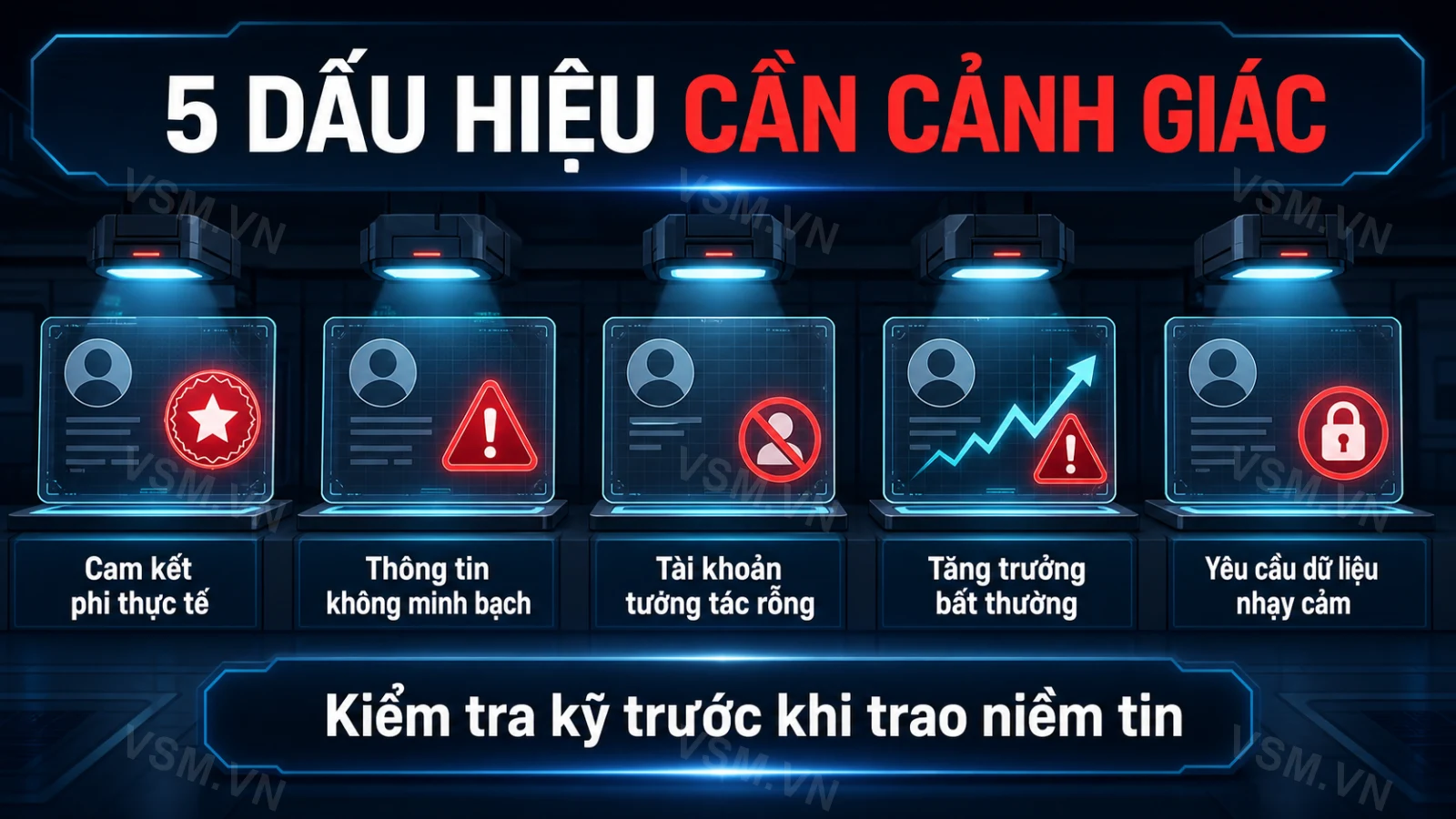
Warning Signs of a Scam Service
Suspiciously Cheap Pricing with No Clear Source
This is the easiest red flag to spot. Even semi-genuine engagement still costs money to deliver — operating costs, account upkeep, support staff. When a service quotes a price 5-10 times below the market average, it's almost certainly running junk bots, mass fake accounts, or simply never intends to deliver anything real. Compare prices across a few providers before committing, rather than jumping straight for the cheapest option.
No Contact Information or Legal Transparency
A serious provider usually has its own website, published company details, a public warranty/refund policy, and a support channel that actually responds. Scam sites, by contrast, tend to run off a single bare landing page — no address, no tax ID, contact only through a personal Zalo or Telegram account — making it nearly impossible to track them down or file a complaint if something goes wrong.
Asking for Your Password or Admin Access
This is the most dangerous sign of all, since it puts your security directly at risk. A legitimate like/follow/view service only ever needs the public link to your post, page, or video — never a password, an OTP code, or admin rights. If a provider asks for any of that, there's a strong chance they intend to hijack your account to resell it, post spam content, or hold it for ransom.
Unrealistic Guarantees
Claims like "10,000 followers in one hour," "permanent growth that never drops," or "lifetime warranty" are almost always a trick. Engagement that spikes too fast and too abnormally gets flagged by platform algorithms (Facebook, TikTok, Instagram, and so on), which can wipe out the gains, tank your reach, or even get the account restricted. A trustworthy provider will recommend a realistic growth pace that mimics genuine user behavior instead of dumping numbers all at once.
Only Accepts Payment through Opaque Channels, with No Receipt
If a provider only accepts transfers to a personal bank account, issues no invoice, and offers no contract or receipt of any kind, you have essentially no recourse if the service doesn't match what was promised. This is exactly why so many scam victims are never able to get their money back.
Why Cheap "Fake" Engagement Is Riskier Than You Think
Many people assume that even if they get scammed, they'll only lose a small amount of money — no big deal. In reality, the damage usually runs far deeper than the amount you paid. An account loaded up with fake engagement, ghost followers, and bot views throws off the platform's ability to judge content quality accurately, which tanks your reach with real users — meaning future posts perform noticeably worse even when the content itself is good. On top of that, some scam services plant malware or phishing links during the "order verification" step specifically to steal victims' login credentials.
Over the long run, relying on fake engagement also distorts your read on what content actually works, steering your strategy in the wrong direction. A pretty number on a report doesn't equal a real customer, a real order, or a real conversion.
How to Choose a Reputable, Safe Engagement Service
- Prioritize providers with a real website, transparent legal information, and a clear warranty policy that lets you verify their track record.
- Never share your password, OTP, or any account access — only ever share the public link.
- Choose a moderate, natural-looking growth pace instead of a sudden spike over a short window.
- Ask for an invoice, receipt, or at minimum a transaction history you can look up later if needed.
- Read genuine reviews and feedback from past customers carefully before committing to a long-term partnership.
If you're looking for a transparent provider for your Facebook page, our Facebook engagement growth service offers a clear process, order-tracking support, and pacing guidance tailored to your page type — all designed to minimize the risk of getting flagged by the platform.
Safety Tips When Dealing With a Service Provider
Before paying, spend a few minutes on quick due diligence: search the brand name alongside terms like "scam" or "fraud" to check for negative reports; check how long their page or website has been active; start with a small trial order before committing to a bulk purchase. For higher-value orders, insist on a written contract or agreement rather than relying on chat messages alone.
Also stay alert for sites impersonating well-known brands, copying the look of reputable providers to trick users. Always type in the official website address directly rather than clicking unfamiliar links sent through messages, ads, or social media comments.
Understanding the Impact of Fake Engagement
How Fake Engagement Affects Your Analytics
Fake engagement can distort your social media analytics significantly. Platforms like Facebook and Instagram use engagement metrics to push content to a wider audience. When these metrics are artificially inflated, it can lead to a mismatched audience, where the content doesn't resonate with real users. This results in lower organic reach over time, as the platform algorithm may perceive your content as less engaging.
The Long-Term Costs of Fake Engagement
While the immediate financial cost of fake engagement might seem low, the long-term costs can be substantial. Brands may find themselves investing more in ads or other marketing strategies to counteract the negative effects of fake engagement. Additionally, rebuilding a tarnished reputation among real followers can be both challenging and costly.
Building Genuine Engagement: Strategies for Success
Creating Authentic Content
One of the best ways to build genuine engagement is by creating content that resonates with your audience. Understanding your audience's interests and pain points allows you to craft messages that connect on a deeper level. Engaging content not only attracts likes and shares but also encourages comments and discussions, which boosts your visibility organically.
Leveraging User-Generated Content
User-generated content (UGC) is a powerful tool for authentic engagement. Encouraging your followers to share their own experiences with your brand can lead to genuine interactions. UGC is perceived as more trustworthy than traditional marketing content and can significantly enhance your brand's credibility.
Engaging with Your Audience
Engagement is a two-way street. Make sure to respond to comments, messages, and mentions promptly. Showing appreciation and addressing concerns can foster a loyal community that advocates for your brand. Regular interaction with your audience builds trust and encourages more meaningful engagement.
Frequently Asked Questions
Is buying engagement services legal? Fundamentally, this is a common form of marketing and isn't illegal in most jurisdictions as long as no fraud or data theft is involved. The real risk lies in picking an untrustworthy provider, not in the service category itself.
How can I tell if a page selling these services is a scam? Check how long the page has been active, look at genuine reviews and comments from past customers, verify their contact information is transparent, and absolutely avoid any provider that asks for your account password.
Can platforms detect fake engagement and suspend accounts over it? Yes, it's possible. Facebook, TikTok, and Instagram all run algorithms designed to detect abnormal engagement patterns; growth that's too fast or too heavily weighted toward fake accounts can get a post's visibility reduced or the account's features restricted.
What should I do if I've already paid a scam service? Save all transaction evidence and message records, then report the transaction to the bank or e-wallet you used and, for larger amounts, file a report with local law enforcement. You should also change the passwords on any related accounts to protect against a potential takeover.
Are there any safe alternatives to buying engagement? Yes, there are several ways to safely increase engagement on social media. These include running targeted ad campaigns, collaborating with influencers, and hosting giveaways or contests. These strategies can attract genuine followers and boost engagement without risking your account's safety.