
Instagram Hashtags: How to Choose Hashtags That Rank in 2026
Vietnamese
Quick answer: To choose Instagram hashtags that rank in 2026, focus on niche relevance and emerging trends rather than sheer volume. Algorithm shifts prioritize context and user engagement with specific content over broad, high-traffic tags. By 2026, expect a stronger emphasis on hyper-relevant, long-tail hashtags (e.g., #sustainablefashiontips instead of #fashion) and those tied to trending audio or Reels challenges. Analyze competitor engagement on their top-performing posts from the last 6-12 months to identify what truly resonates.
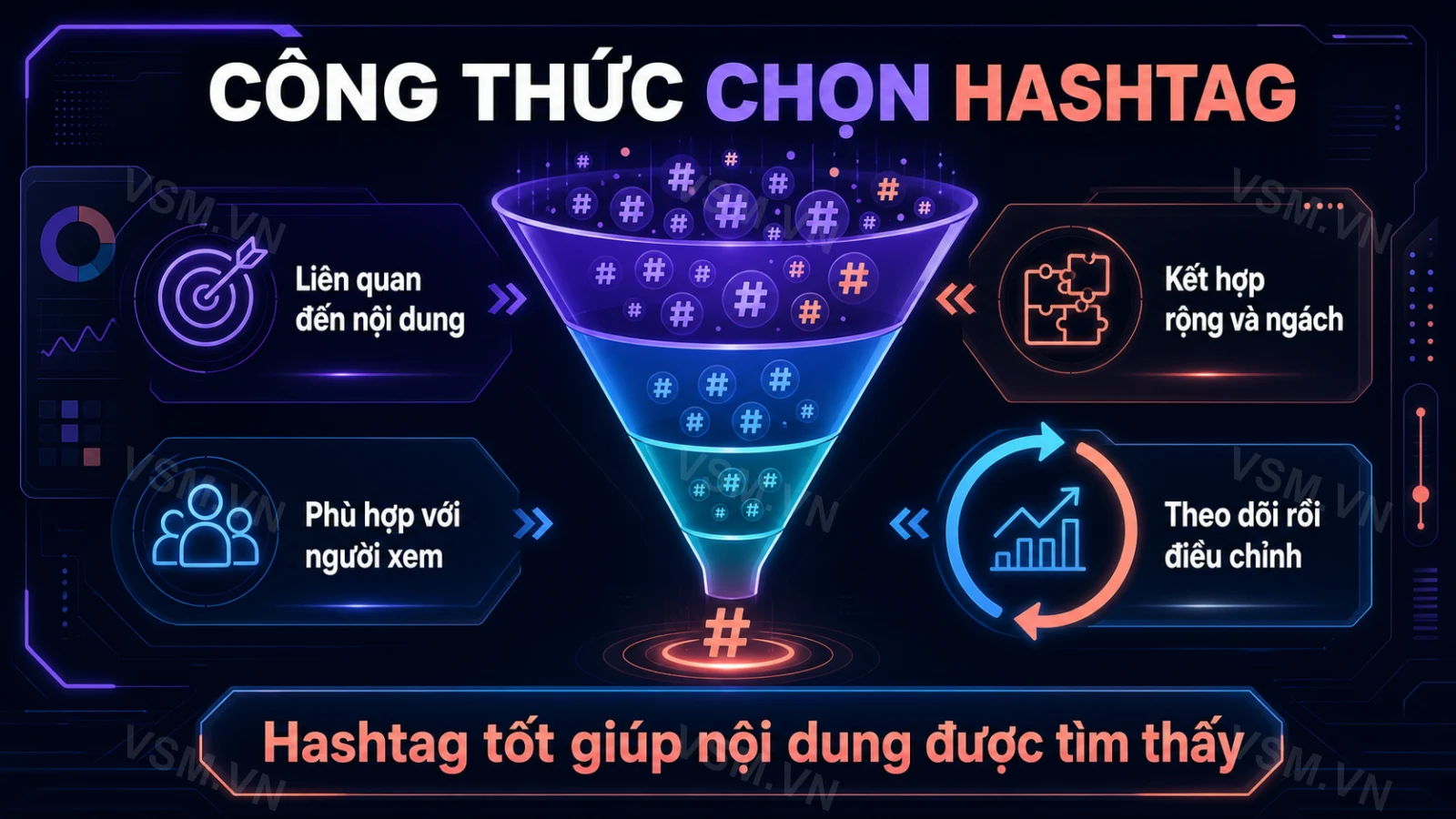
If your Instagram account posts polished photos and well-crafted captions but your posts still sink into just a few dozen views, the problem may lie in your Instagram hashtags - a seemingly minor detail that actually determines whether the algorithm pushes your content to new users. Heading into 2026, Instagram has changed the way it handles hashtags quite a bit compared to a few years ago: spamming thirty hashtags no longer gets you to the top. What matters now is choosing the right phrases, in the right context, at the right time.
This article rounds up how to choose effective Instagram hashtags for 2026, covering hashtag categories, combination formulas, and the common mistakes that quietly tank engagement even when the hashtags look correct. Whether you're building a personal channel, a sales page, or a personal brand on Instagram, this is foundational knowledge you need before optimizing any content.
What Are Instagram Hashtags, and Why Do They Still Matter in 2026?
Hashtags are keywords tagged with a # symbol that help Instagram categorize content by topic, allowing the platform to surface your posts to users with related interests even if they don't follow you yet. Many people assume hashtags became irrelevant once Instagram doubled down on Reels and behavior-based recommendations, but in reality hashtags still function as a contextual signal that helps the system understand what topic your content belongs to, leading to more accurate distribution on the Explore tab and in search results.
What's different in 2026 is that Instagram now prioritizes relevance over quantity. A post using five hashtags that are tightly aligned with its topic, and that gets engagement from accounts in the same niche, typically ranks faster than a post stuffed with thirty generic hashtags like #like #follow #instagood that don't reflect what the content is actually about.
The Evolution of Hashtags: From Keyword Stuffing to Contextual Relevance
In the early days of Instagram, the more hashtags you used, the better. It was common practice to fill your caption or first comment with a laundry list of keywords, hoping to catch any user searching for even tangentially related terms. This led to a lot of noise and a poor user experience, as feeds became cluttered with irrelevant content.
Instagram's algorithm has become significantly more sophisticated since then. It now analyzes not just the hashtags, but also the visual content of your post, the text in your caption, the audio (for Reels), and crucially, the engagement patterns of your audience. If your post uses #travel and users who typically engage with travel content interact positively with your post, the algorithm reinforces that signal, pushing it to more travel enthusiasts. If, however, your post about a new recipe uses #travel, users might quickly scroll past, sending a negative signal to the algorithm that the content isn't relevant to that hashtag.
This shift means that quality over quantity isn't just a recommendation; it's a necessity. Irrelevant hashtags can actively harm your reach by confusing the algorithm and leading to low engagement from users who are shown your content based on those misleading tags.
Types of Instagram Hashtags You Should Combine
For a hashtag set to work effectively, you need to mix several different types rather than simply picking the ones with the highest search volume. Here are the core hashtag groups every post should include:
- Broad topic hashtags: tagged on a huge volume of posts, several million or more, giving you access to a large audience but with high competition - for example #travel or #foodie.
- Niche hashtags: more specific, with a moderate post count ranging from tens of thousands to a few hundred thousand, making it easier to rank because there's less competition - for example #danangtravel instead of just #travel.
- Branded hashtags: tied to your channel name, campaign name, or product name, helping build long-term recognition and making campaign performance easier to track.
- Location hashtags: useful for F&B, travel, and real estate businesses, since Instagram often prioritizes surfacing content based on the viewer's location.
- Trending hashtags: tied to a current event or trend, helping your post catch a short-term spike in search volume.
Deep Dive into Hashtag Categories with Examples
Broad Topic Hashtags: The Gateway
These are your high-level, general terms. Think of them as the front door to a very large building. They expose your content to a massive audience, but the competition to stand out is fierce. You might get a few views from these, but don't expect them to be your primary driver of engagement for new followers.
- Example for a fashion creator: #fashion #style #ootd
- Example for a fitness coach: #fitness #workout #healthylifestyle
- When to use: Always include one or two to broaden your potential reach, but don't rely solely on them.
Niche Hashtags: The Sweet Spot
This is where the magic happens. Niche hashtags connect you with a highly engaged, specific audience. These users are actively looking for content exactly like yours, making them more likely to interact, follow, and convert. The competition is lower, increasing your chances of ranking in the "Top" or "Recent" sections of these tags.
- Example for a fashion creator: If your post is about sustainable fashion, use #sustainablefashion #ecofashion #ethicallymade. If it's about vintage clothing, use #vintagefashion #thriftstorefinds.
- Example for a fitness coach: If your post is about high-intensity interval training, use #hiitworkout #intervaltraining. If it's about plant-based meal prep, use #veganmealprep #plantbasedfitness.
- When to use: These should form the core of your hashtag strategy (3-5 per post).
Branded Hashtags: Building Your Empire
These are unique to you, your business, or your specific campaigns. They are crucial for brand building, community management, and tracking the success of particular initiatives. Encourage your audience to use them too!
- Example for a personal brand: #YourNameOfficial, #YourBrandTips
- Example for a product launch: #NewProductLaunch2026, #ProductXReveal
- When to use: Consistently use one or two branded hashtags on every post.
Location Hashtags: Localizing Your Reach
Essential for businesses with a physical presence or content relevant to a specific geographic area. Instagram's algorithm often prioritizes showing local content to local users, making these incredibly powerful for local discovery.
- Example for a coffee shop: #CityCoffeeShop #DowntownEats #YourNeighborhood
- Example for a travel blogger: #ParisTravelGuide #ExploreFrance #HiddenGemsOfParis
- When to use: Use when your content has a strong geographical tie.
Trending Hashtags: Catching the Wave
These are dynamic and time-sensitive. They capitalize on current events, holidays, or viral challenges. Using them can give your post a temporary boost in visibility, but remember to ensure relevance. An irrelevant trending hashtag can backfire.
- Example for a holiday post: #ChristmasDecor #HalloweenCostumeIdeas
- Example for a viral challenge: #ChallengeName (if it aligns with your content and brand)
- When to use: Sparingly and only when genuinely relevant to your content.
The Formula for Choosing Instagram Hashtags That Rank in 2026
Once you understand the hashtag types, the next step is building a combination formula for each post. A balanced hashtag set usually follows this structure:
- Two to three niche hashtags that closely match the post's content, serving as the core signal that helps the algorithm identify the topic.
- One to two broad hashtags to expand your reach beyond your current audience.
- One fixed branded hashtag, used consistently across posts to build your channel and make it easy to track.
- One location or trending hashtag when it fits the content you're publishing.
The ideal count ranges from eight to fifteen hashtags per post, rather than maxing out at thirty the way people used to. Using too many unrelated hashtags makes it harder for the algorithm to pin down your main topic, which lowers your distribution priority. Hashtags are also just one piece of the broader engagement puzzle: content quality, how quickly engagement builds in the first hour after posting, and posting frequency all directly affect whether a post actually ranks. This is also why many account owners pair their posts with an Instagram likes boosting service right after publishing, creating an early engagement signal that encourages the algorithm to push the content to more people before the hashtag effect fully kicks in.
Step-by-Step Hashtag Selection Process
To put this formula into practice, follow these steps for every new post:
- Analyze Your Content: What is the absolute core topic of your post? What specific problem does it solve, or what specific interest does it cater to? Be as precise as possible.
- Brainstorm Niche Keywords: Based on your content analysis, list 5-10 very specific keywords. Use synonyms and related terms. For example, if you post about "vegan baking," think of "plant-based desserts," "dairy-free treats," "cruelty-free baking."
- Research Niche Hashtags: Go to Instagram's search bar. Type in your brainstormed keywords. Look at the suggestions and the number of posts for each. Aim for hashtags with 10k to 500k posts. Select 3-5 of the most relevant ones.
- Add Broad Hashtags: Think about the broader category your niche falls under. If "vegan baking" is your niche, "baking" or "foodie" would be broad. Select 1-2 broad hashtags with 1M+ posts.
- Include Branded Hashtags: Always add your unique branded hashtag(s). If you don't have one, create one now!
- Consider Location/Trending: Does your content have a geographical element? Is there a relevant current event or trend? If so, pick 1-2.
- Review and Refine: Count your chosen hashtags. Is it between 8-15? Are they all highly relevant? Remove any that feel forced or only vaguely related.
Example: A Post about a New Vegan Cookie Recipe
- Niche: #vegancookies #plantbaseddessert #dairyfreebaking #healthybaking #veganrecipes
- Broad: #baking #foodie
- Branded: #YourBrandBakes
- Location (if applicable): #LondonFoodie
- Total: 8 hashtags. This set is specific, reaches a broader audience, builds brand, and targets local users if applicable.
How to Research and Check Hashtags Before Using Them
Before tagging hashtags onto a post, spend a few minutes checking them to avoid picking ones that are already saturated or restricted. Type a keyword related to your topic into the Instagram search bar, and the system will show you how many posts currently use that hashtag. Favor hashtags with a post count somewhere between a few tens of thousands and under one million, since that range offers steady search volume without being overly competitive against large, long-established accounts.
Also pay attention to the posts pinned under the Top Posts section when you look up a hashtag: if those top posts have engagement levels far higher than your own account, your chances of breaking into that hashtag's top results in the short term are slimmer. In that case, add a few smaller niche hashtags to increase your odds of ranking, rather than only targeting large hashtags that are already crowded with competitors.
Advanced Hashtag Research Techniques
Beyond the basic search bar, there are more nuanced ways to find high-performing hashtags:
- Competitor Analysis: Look at what hashtags successful accounts in your niche are using. Don't just copy them, but use them as a starting point for your own research. Pay attention to which of their posts perform best and what tags they used.
- Instagram's "Related Hashtags" Feature: When you search for a hashtag, Instagram often suggests related ones. These can be goldmines for discovering relevant niche tags you might not have thought of.
- Audience Research: What hashtags does your target audience follow or use? Engage with them, look at their profiles, and see what communities they're part of.
- Third-Party Tools: While not strictly necessary, several paid and free tools (e.g., Later, Sprout Social, Tailwind) offer hashtag suggestions, performance tracking, and analysis, which can save time for larger accounts or businesses.
Monitoring Hashtag Performance
Your work isn't done once you've posted. Regularly review your Instagram Insights (available for Business or Creator accounts) to see which hashtags are driving reach and engagement. Look for the "Reach from Hashtags" metric. This data will tell you which types of hashtags and specific tags are most effective for your content and audience, allowing you to refine your strategy over time. Keep a spreadsheet or note of your top-performing hashtags and continuously update your lists.
Common Mistakes When Using Instagram Hashtags
- Overusing restricted (banned) hashtags: some hashtags have been flagged by Instagram due to a history of spam, and using them can significantly reduce your post's visibility. Check popular but sensitive hashtags before using them.
- Reusing the exact same hashtag set on every post: repeating one fixed set of hashtags over a long period can lead the system to interpret it as automated behavior, reducing your account's trust score.
- Stuffing in hashtags unrelated to the content: inserting trending but off-topic hashtags just to bait views causes viewers to bounce quickly, which lowers your content's quality score in the algorithm's eyes.
- Overthinking whether to place hashtags in the caption or the first comment: this used to be a popular debate, but Instagram now treats both placements almost identically - what matters is relevance, not placement.
Elaborating on Common Hashtag Pitfalls
The Peril of Restricted Hashtags
Instagram actively combats spam and inappropriate content. When a hashtag becomes associated with such activities, Instagram may restrict or even ban it. Using a restricted hashtag, even innocently, can lead to your post being suppressed or even shadowbanned, meaning its visibility is severely limited without you being explicitly notified. Always do a quick check: search for the hashtag on Instagram. If it shows a message like "Recent posts from #hashtag are currently hidden because the community has reported some content that may not meet Instagram's community guidelines," avoid it completely.
The "Set It and Forget It" Trap
Instagram's algorithm values authenticity and dynamic content. If you use the exact same 10 hashtags on every single post, it signals a lack of effort and potentially automated behavior. The algorithm might start seeing your content as repetitive or even spammy, leading to reduced reach. While it's okay to have a core set of branded hashtags, you should aim to rotate a significant portion (30-40%) of your niche and broad hashtags with each post. Develop several sets of hashtags tailored to different content themes you cover, and switch between them.
Irrelevance: The Engagement Killer
The goal of hashtags is to connect your content with interested users. If you use a trending hashtag like #MemeOfTheDay on a serious educational post, you might get a few initial clicks from users expecting humor. However, they will quickly realize the content isn't what they expected and scroll away. This high bounce rate tells Instagram that your content isn't relevant to that hashtag, damaging your post's overall performance and potentially your account's authority over time. Always prioritize relevance over perceived reach.
Placement Obsession: A Distraction
For a long time, creators debated whether hashtags should go directly in the caption or in the first comment. The theory was that putting them in the comments made the caption cleaner and less "spammy" looking. However, Instagram has repeatedly stated that both placements are treated virtually the same by the algorithm. Focus your energy on selecting the most relevant and effective hashtags, rather than worrying about their exact positioning. For aesthetic reasons, many still prefer the first comment, but it won't impact algorithmic reach.
Combining Hashtags With a Comprehensive Engagement Strategy
Hashtags are just one link in the bigger chain of Instagram growth. For a post to genuinely rank, hashtags need to be paired with content that hooks viewers within the first few seconds, a posting time that matches when your target audience is actually active, and a sustainable strategy for growing views alongside it. If you want to dig deeper into optimizing the factors beyond hashtags to widen your reach, check out these 10 effective ways to increase Instagram views and apply them in tandem, so your posts both get prioritized by the algorithm and keep viewers engaged longer after they click through from a hashtag.
In the long run, build your own hashtag lists organized by the content topics you post about most often, then rotate roughly thirty to forty percent of the hashtags on each post to avoid exact repetition. Track performance through the "Reach from non-followers" metric in Instagram Insights so you know exactly which hashtags are genuinely working and which ones to drop.
Beyond Hashtags: The Holistic Instagram Growth Ecosystem
While hashtags are a crucial discovery tool, they are only effective when integrated into a broader, holistic Instagram strategy. Think of your Instagram presence as an ecosystem where every element supports the others. Here's how to ensure your hashtag efforts aren't in vain:
1. Content Quality and Format
Hook Factor: The first few seconds are critical. Whether it's a visually striking image, an intriguing opening line in a caption, or an immediate action shot in a Reel, your content needs to grab attention instantly. High-quality visuals, clear audio, and engaging storytelling are non-negotiable.
Value Proposition: Does your content educate, entertain, inspire, or solve a problem? Users stay engaged and share content that provides value. A post that delivers on its promise will naturally perform better, regardless of hashtags.
Format Optimization: Instagram prioritizes different content formats at different times. Reels currently have significant reach potential. Experiment with carousels, single images, and Stories to see what resonates most with your audience and for specific types of content.
2. Engagement and Community Building
Prompting Interaction: Ask questions in your captions, run polls in Stories, and encourage comments. The more your audience interacts, the more Instagram sees your content as valuable and pushes it to others. Respond to every comment and DM to foster a sense of community.
Early Engagement: The initial hours after posting are critical. High engagement (likes, comments, shares, saves) in this window signals to the algorithm that your content is popular and should be shown to more users. This is where strategic tools, like an Instagram likes boosting service, can provide an initial push, but it must be followed by genuine interaction to sustain momentum.
Collaborations: Partner with other creators or brands in your niche. This exposes your content to new, relevant audiences and can significantly boost your reach and follower count.
3. Timing and Consistency
Optimal Posting Times: Use Instagram Insights to identify when your audience is most active. Posting when your followers are online maximizes the chances of early engagement, which in turn helps your post gain algorithmic traction.
Consistent Schedule: Regular posting keeps your audience engaged and signals to Instagram that you are an active, reliable creator. Whether it's daily, three times a week, or weekly, stick to a schedule that you can realistically maintain without compromising content quality.
4. Analytics and Adaptation
Deep Dive into Insights: Beyond "Reach from Hashtags," explore other metrics like "Reach from Explore," "Profile Visits," "Follows," and "Saves." Understand which content types drive these actions and what hashtags accompanied them. This data is invaluable for refining your strategy.
A/B Testing: Don't be afraid to experiment. Try different hashtag combinations, caption styles, content formats, and posting times. Analyze the results and adapt your strategy based on what performs best for your unique audience.
By focusing on these interconnected elements, you create a robust Instagram strategy where effective hashtag usage amplifies content that is already designed for high engagement and discovery. This integrated approach is the true path to sustainable growth on the platform in 2026 and beyond.
Frequently Asked Questions
How many hashtags should I use on one Instagram post? About eight to fifteen hashtags, combining niche, broad, and branded hashtags, usually performs better than cramming in a maximum of thirty hashtags the old way.
Is it better to place hashtags in the caption or in the comments? Instagram currently treats both placements in almost the same way. What actually matters is how relevant the hashtag is to your content, not where you place it.
How can I tell if a hashtag is currently restricted? Try typing the hashtag into the search bar; if Instagram shows a warning or hides recent post results, that hashtag is likely restricted and you should avoid using it on your post.
Do hashtags get a post to the top instantly? No. Hashtags are only a supporting signal that helps the algorithm understand your content. Early engagement speed and content quality are what actually determine whether a post gets pushed to the top of a hashtag.
Should I use the same hashtags on Reels and regular posts? While some core hashtags can overlap, consider the specific nature of Reels. They often thrive on trending audio and challenges, so incorporating relevant trending hashtags specific to Reels can be more effective than simply reusing your static post hashtags.
How often should I update my hashtag lists? You should continuously monitor performance via Instagram Insights. Aim to review and potentially update your core hashtag lists every 1-3 months, especially if you see a decline in "Reach from Hashtags" or if new trends emerge in your niche.