
Is Buffing Facebook Likes Risky? Truths and Safe Methods
Vietnamese
Quick answer: Yes, buffing Facebook likes carries significant risks. While some methods appear safe, Facebook's algorithms are sophisticated, often detecting artificial engagement. This can lead to reduced organic reach, as your content is shown to fewer genuine users, or even account suspension, a penalty that can take months to resolve. Focus on authentic engagement strategies for long-term growth.
Buffing Facebook likes is a hot topic for shop owners, influencers, and page admins aiming to make their posts look more appealing and quickly boost engagement. However, a common concern is: Is buffing Facebook likes risky? This article reveals the truth about Facebook's moderation mechanisms, identifies when buffing likes is truly dangerous, and how to increase likes while keeping your account safe.
In reality, not all buffing activities lead to account suspension, nor is it always completely safe. The risk level depends on how you buff, the source of likes, the speed of increase, and the initial "health" of your Facebook account. Understanding the platform's monitoring mechanisms will help you boost interactions effectively without risking the account you've worked hard to build.
What is Buffing Facebook Likes?
Buffing Facebook likes involves using tools, software, or services to rapidly increase the number of likes on a post, photo, video, or fanpage, instead of waiting for organic user interactions. Common goals include: boosting trust in sales posts, enhancing interaction metrics to extend Facebook's post distribution, or simply creating a crowd effect that convinces viewers and facilitates purchase decisions.
There are two main approaches to buffing likes currently available in the market:
- Automated tool/bot buffing: employs software to simulate mass like-clicking, often using fake or cloned accounts with no real activity.
- Buffing with real likes through reputable services: likes come from real Facebook accounts with avatars, friends, and normal activity histories.
The distinction between these two methods determines the safety of buffing likes, rather than the "like-increasing" action itself. The first method often leads to negative consequences, while the second can be a legitimate way to enhance engagement.
Why Are People Concerned About Buffing Facebook Likes?
Facebook uses AI systems to monitor unusual signs related to fake interactions, spam, and fake accounts. When suspicious signs are detected, the system may limit features, quietly remove fake interactions, or, in severe cases, temporarily or permanently lock the account responsible for the post or the fake liking accounts.
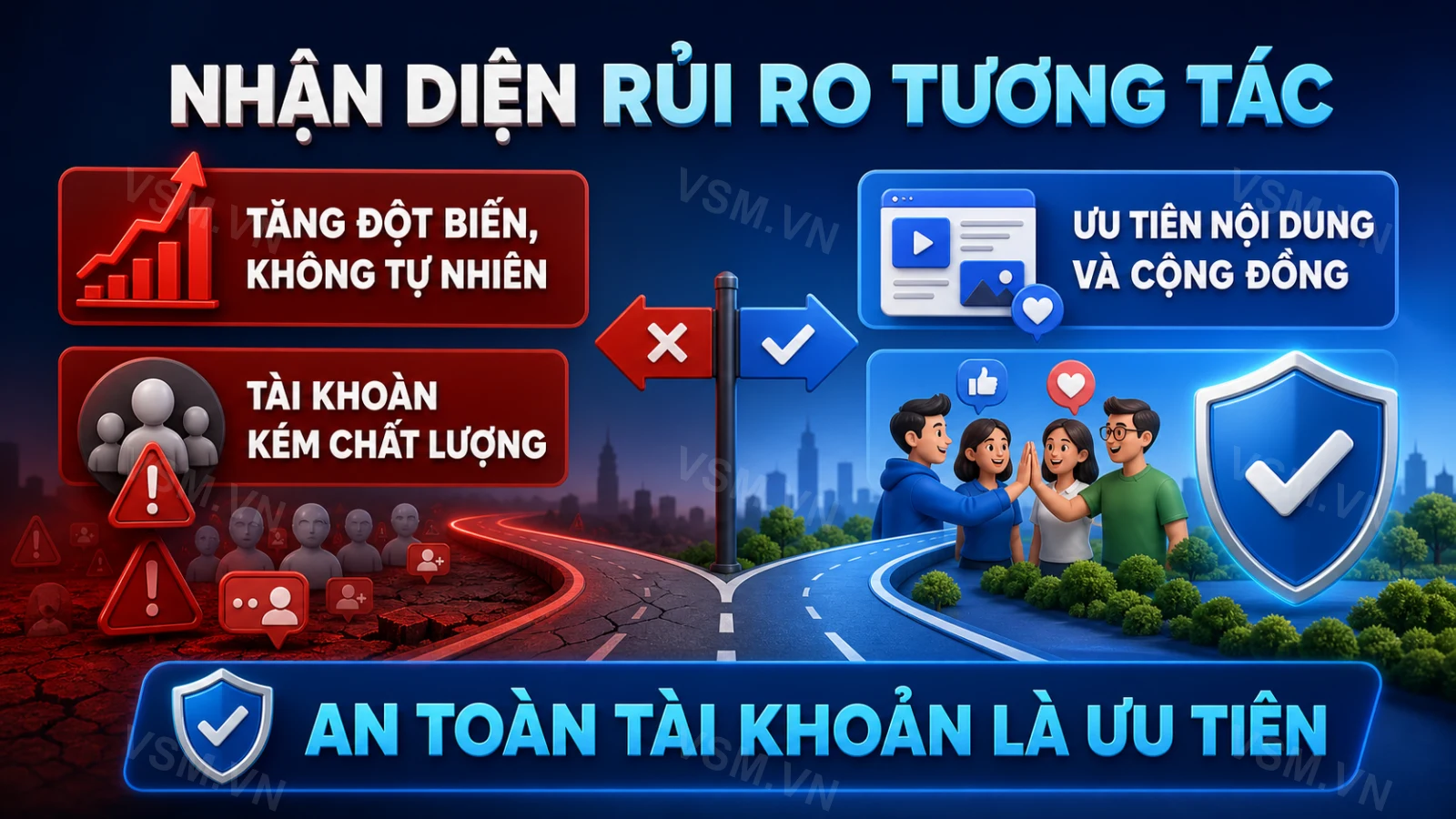
Signs Facebook Considers Unusual
- Sudden spikes in likes within a very short time, such as hundreds to thousands of likes in just a few minutes.
- Likes coming from newly created accounts, without avatars, friends, or any other activity.
- Multiple accounts liking simultaneously from the same IP address or device.
- Accounts used for buffing likes employing simulation software, logging in en masse, which raises bot suspicion.
- Requests for unusual access permissions, like asking for passwords or login cookies, from unclear buffing tools.
These are the factors that lead Facebook's algorithm to flag "unusual activity," which could result in account restrictions or locks. Being aware of these signs is crucial for anyone considering buffing likes.
Is Buffing Facebook Likes Risky? The Truth You Need to Know
The precise answer is: there is risk, but the risk stems not from the act of "buffing likes" itself, but from how you perform the buffing.
- If you use cheap bot tools, inflate fake likes quickly, with likes from cloned accounts: the risk of account suspension, interaction removal, and reduced reach is high, as these are behaviors Facebook's algorithm is designed to detect and handle strictly.
- If you use reputable services, with likes from real accounts, increasing at a reasonable pace without requesting your account access: the risk decreases significantly, almost equivalent to natural likes from users.
In other words, "buffing likes" is not the direct cause of account suspension; the real cause lies in spam signs, fake interaction sources, and deep account interventions like requesting passwords or login cookies. This is why many business fanpages still quietly use seeding services and enhance interaction in marketing campaigns while maintaining stable account operations over many years.
How to Buff Facebook Likes Safely and Minimize Account Suspension Risk
To achieve your desired engagement levels while protecting your account from unnecessary risks, consider the following principles:
- Choose real like sources, avoid fake/clone accounts: prioritize providers offering Facebook Like Buffing services with real account likes, transparent processes, instead of ambiguous bot tools.
- Increase at a natural pace: gradually increase the number of likes over time rather than dumping thousands of likes in a few minutes, helping the system not to flag it as unusual activity.
- Do not provide passwords, cookies, or account access to unreliable third parties, as this is the most common cause of account theft or suspension, not necessarily the buffing itself.
- Enable two-factor authentication (2FA) for both personal and fanpage accounts to reduce unauthorized login risks when using external services.
- Combine quality content with buffing likes: buffing likes should only be an initial "push," while the post content must be engaging enough to sustain natural interactions, avoiding fake likes with nearly zero comments or shares.
- Avoid using multiple services/tools simultaneously on the same post, to prevent overlapping sources that make the system suspicious.
If you want to learn more about the implementation steps, you can refer to the guide on safely and effectively buffing Facebook likes to apply the correct process from the start and avoid unnecessary account risks.
When Should and Shouldn't You Buff Facebook Likes?
When to Buff Likes
- When you need to create social proof for a sales livestream or new product launch event.
- When you want to "seed" initial interactions so algorithms prioritize wider post distribution.
- When running in conjunction with an advertising campaign, needing attractive interaction metrics to boost credibility before increasing budget significantly.
- When you are launching a new product and need immediate engagement to build momentum.
- When you have valuable content that deserves more visibility, and a slight push could elevate its reach.
When Not to Buff Likes
- When the account or fanpage is too new, lacking stable activity history.
- When you want to drastically increase numbers just for "show" without serving any specific business goal.
- When using an important personal account without basic security measures like 2FA enabled.
- When the content is not engaging enough to retain the users who may like it, leading to a high rate of unengaged likes.
- When you are unsure about the service you are using and its reputation, as this can lead to unforeseen consequences.
Comparing Bot Tool Buffing and Reputable Buffing Services
- Source of Likes: bot tools often use fake accounts, easily detected by Facebook; reputable services use real accounts, less likely to be flagged as suspicious.
- Speed of Increase: bot tools often push fast, in bursts over short periods; reputable services increase at a reasonable pace, mimicking natural interactions.
- Account Security: many bot tools require logging in or account access; reputable services only need a public post link, without demanding passwords.
- Long-term Stability: likes from bot tools are subject to Facebook's scrutiny and mass removal shortly; likes from reputable services tend to maintain long-term stability.
- Customer Support: reputable services often have customer support available to answer questions and resolve issues, while bot tools usually do not offer assistance.
Concrete Examples of Effective Buffing Strategies
Case Study: A Small Business Launching a New Product
A local bakery, “Sweet Delights,” was preparing to launch a new line of vegan pastries. They were concerned about their low engagement rates and decided to implement a buffing strategy. They chose a reputable service that offered real likes from active Facebook accounts. Within a week, they gradually increased likes on their promotional posts by 300%. As a result, they noticed a significant boost in organic engagement with comments and shares, leading to a successful product launch and increased sales.
Case Study: Influencer Marketing Campaign
Influencer “Jane Doe” was collaborating with a fitness brand to promote a new workout program. To create initial buzz, she decided to buff likes on her promotional post using a reputable service. By strategically timing the increase to coincide with her peak engagement hours, she managed to gain 1,000 likes within a few hours. This initial boost helped her reach a larger audience, leading to more organic interactions and sign-ups for the program.
Frequently Asked Questions
Can Facebook detect buffed likes? It can, if the likes come from fake accounts or with abnormal speed. With real like sources and reasonable increase speed, the chance of detection is very low as it appears like natural user interaction.
Does buffing many likes reduce post reach? If fake likes are not accompanied by comments and shares, algorithms may identify abnormal interaction rates and reduce distribution priority. Thus, combining buffing likes with quality content is recommended to maintain a balanced natural interaction rate.
Do you need to provide your account password for buffing likes? No. Reputable buffing services only require the public post or fanpage link and never ask for your password or account access. This is also how to distinguish safe services from fraudulent tools.
Should a newly created account immediately buff likes? It is not advisable to buff large amounts immediately when the account or fanpage is too new. Allow the account to operate stably for a while, then buff moderately and gradually to avoid being flagged as unusual by the system.
What is the best way to maintain engagement after buffing likes? To maintain engagement, ensure your content is high-quality, relevant, and regularly updated. Encourage interaction by asking questions or prompting users to share their thoughts in the comments.
Can buffing likes help with Facebook ads? Yes, buffing likes can enhance your credibility and social proof, making your ads appear more trustworthy. However, combine this strategy with targeted advertising for the best results.