
SEO On-Page Checklist 2026: 20 Essential Optimization Factors
Vietnamese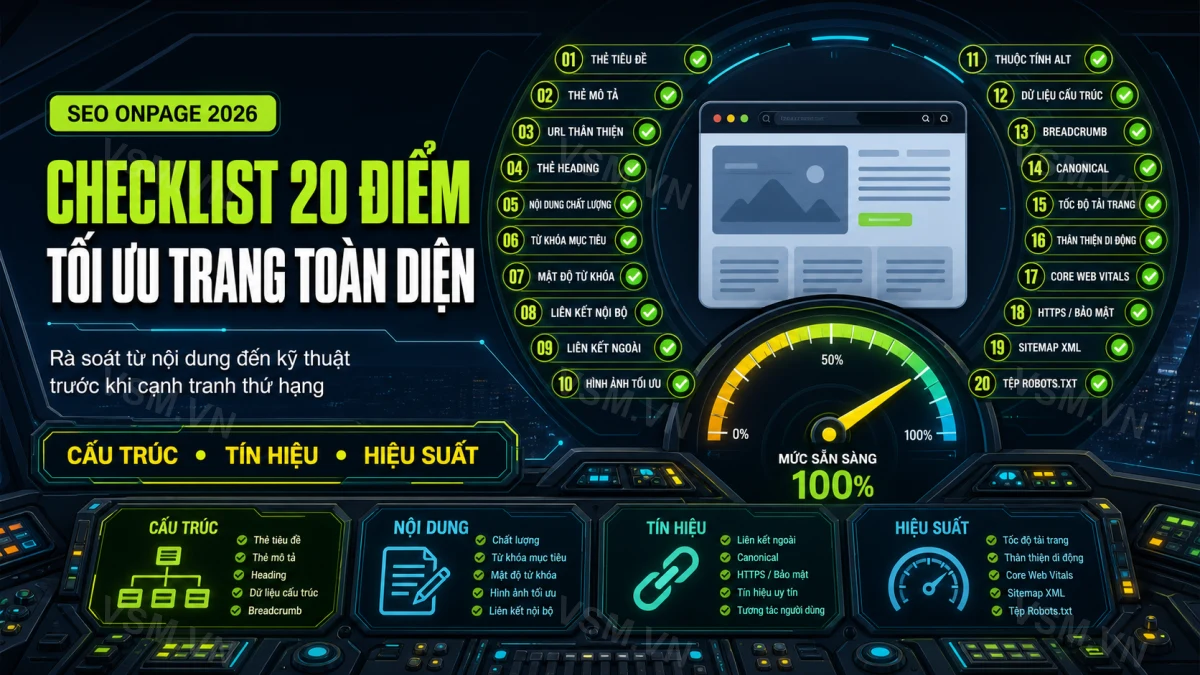
Quick answer: The 2026 SEO On-Page Checklist will likely prioritize user experience and advanced intent understanding even more than today. Expect factors like Core Web Vitals to evolve, potentially incorporating new metrics for interactivity and visual stability. Content will need to demonstrate deep topical authority, potentially leveraging AI-driven analysis for comprehensive coverage. Mobile-first indexing will remain paramount, with a strong emphasis on speed and accessibility across all device types, especially for emerging technologies like spatial computing interfaces by 2026.
On-page SEO is the foundation that determines whether Google correctly understands a website's content and topic well enough to rank it highly. Heading into 2026, Google's algorithm increasingly favors real-world user experience, page speed, and content depth over the old approach of simply counting keyword density. The SEO On-Page Checklist 2026 below brings together 20 essential optimization factors, organized into technical, content, link, and user-experience groups, so you can audit your website systematically instead of working on gut feeling.
This guide works equally well for beginners and experienced SEOs who want to refresh their on-page audit process against the latest standards. Use it as a reference every time you publish a new article or review older pages that have started slipping in the rankings.
What Is On-Page SEO and Why It Matters Even More in 2026
On-page SEO covers the optimization techniques applied directly on a website — titles, content, images, load speed, and internal link structure — as opposed to off-page SEO, which focuses on backlinks and external signals. In 2026, Google continues to refine its quality-evaluation systems around real-world Page Experience and content trustworthiness (E-E-A-T: Experience, Expertise, Authoritativeness, Trustworthiness). As a result, on-page SEO is no longer just about inserting keywords; it now demands a comprehensive investment spanning technical execution and editorial quality.
A well-optimized page helps Google understand its topic correctly, gets indexed faster, and stands a better chance of earning premium placements such as Featured Snippets or Sitelinks. If handling this in-house feels overwhelming or you simply don't have the bandwidth to monitor it, consider working with a professional on-page SEO service that audits and optimizes your site methodically against every technical criterion.
Technical On-Page Factors
This is the mandatory foundation that must be solid before you optimize content, because if Googlebot can't crawl and index your pages, every piece of writing you produce is wasted effort.
- Page speed (Core Web Vitals): Keep LCP under 2.5 seconds, INP under 200ms, and CLS under 0.1 for a strong experience on both mobile and desktop.
- Mobile-first design: Pages must display well on smartphones, since Google primarily indexes the mobile version of a site.
- HTTPS certificate: A secure connection is a baseline requirement that directly affects a page's trustworthiness.
- SEO-friendly URL structure: Short URLs that contain the primary keyword and avoid messy parameters.
- XML sitemap and robots.txt: Clearly declared so search engines know which pages to crawl and which to skip.
- Structured data (schema markup): Marking up articles, products, and FAQs to increase the chance of rich snippets in search results.
How to Prioritize Technical SEO Tasks
When it comes to technical SEO, deciding where to start can be daunting. Prioritize tasks based on their impact and feasibility. Address issues that affect multiple pages first, such as HTTPS implementation or site-wide mobile responsiveness. Use tools like Google Search Console to identify and fix crawl errors or indexing issues. Schedule regular audits to ensure these technical aspects remain in optimal condition.
Content and Keyword Factors
Content remains the core factor that determines long-term rankings. In 2026, Google prioritizes content that satisfies the user's actual search intent over content that's simply long but unfocused.
- Title tag: Contains the primary keyword, roughly 55-60 characters long, placed near the start of the phrase when it reads naturally.
- Meta description: A compelling summary within 150-160 characters that boosts click-through rate (CTR).
- Clear H1-H2-H3 heading hierarchy: Each page should have exactly one H1, with H2/H3 tags breaking the content into a logical flow.
- Naturally distributed keywords: Appearing in the opening paragraph, a few headings, and spread evenly throughout the piece — never stuffed in a way that backfires.
- Content length and depth: The article needs enough substance to fully answer the reader's question; there's no fixed word-count formula that fits every topic.
- E-E-A-T signals: Demonstrating real-world experience, citing credible sources, and including clear author information for in-depth content.
Crafting Content That Resonates
Creating content that truly resonates with your audience goes beyond keyword placement. Start by understanding your audience's pain points and search intent. Tools like Google Trends, AnswerThePublic, and keyword research tools can provide insights into what your audience is searching for. Once you've identified these areas, create detailed, engaging content that addresses these needs. Use storytelling techniques to make complex topics relatable and easy to understand.
Image and Link Factors
Images and links don't just support the reading experience — they're also the channel Google uses to understand context and guide users toward related content.
- ALT text for images: A concise description of the image content that can naturally include a secondary keyword.
- Image compression: Use WebP or AVIF formats to shrink file size while preserving display quality.
- Internal links: Point to related articles or service pages to keep readers engaged and distribute SEO value across the site. If you'd like the bigger picture before diving into individual on-page factors, take a look at this guide on what comprehensive SEO involves to understand the full implementation process from the ground up.
- External links to authoritative sources: Boost content credibility when citing data or research from a reputable source.
Best Practices for Using Images and Links
Optimize images not only for SEO but also for user experience. Ensure your images are relevant to the content and enhance the reader's understanding of the topic. For links, create a logical internal linking structure that guides users through your content journey, keeping them engaged and reducing bounce rates. When linking externally, ensure the sources are reputable and add value to your content, reinforcing your page's authority.
User Experience (UX) Factors
Google increasingly treats real user behavior as an indirect ranking signal, which is why UX factors can no longer be separated from on-page SEO.
- Reasonable dwell time: Engaging, easy-to-read content keeps visitors on the page longer instead of bouncing immediately.
- Low bounce rate: Optimize layout and add related content to keep readers exploring other pages on your site.
- Breadcrumb navigation: Helps both users and Google understand where a page sits within the site's structure.
- Clean design free of intrusive ads: Avoid popups that cover content or ads packed too densely, both of which hurt the reading experience.
Enhancing User Experience for SEO Success
To enhance user experience, focus on intuitive navigation and a responsive design that adapts to various devices and screen sizes. Use clear, concise language and break up large blocks of text with images, bullet points, or call-out boxes. Regularly gather user feedback through surveys or usability tests to identify areas for improvement. Remember, a positive user experience can lead to increased dwell time and engagement, signaling to Google that your content is valuable and relevant.
Common Mistakes to Avoid in On-Page SEO
Beginners often fall into the trap of keyword stuffing, copying content from competitors, or skipping page-speed optimization because they assume content is the only thing that matters. Another common mistake is leaving multiple pages with duplicate content without a canonical tag, leaving Google unsure which page to rank. Changing URLs repeatedly without proper 301 redirects also wipes out all the SEO value a page had already built up. To avoid these pitfalls, build a fixed checklist and review it every quarter instead of optimizing once and forgetting about it.
Advanced On-Page SEO Strategies
As you become more comfortable with the basics, explore advanced strategies to further enhance your on-page SEO. Consider implementing A/B testing to determine which page elements impact user engagement or conversion rates the most. Use heatmaps to analyze user interaction with your content, identifying areas that capture attention or are ignored. Experiment with voice search optimization, as voice queries continue to rise, focusing on natural language and question-based content. By staying ahead of trends and continuously testing new strategies, you can ensure your on-page SEO efforts remain effective and competitive.
Frequently Asked Questions
How is on-page SEO different from off-page SEO? On-page SEO covers optimizations made directly on the website, such as content, speed, and URL structure, while off-page SEO focuses on external factors like backlinks, social media, and authority signals from other sites linking back to yours.
How long does it take to see results after on-page optimization? It typically takes 4-12 weeks for Google to recrawl the site and update rankings, depending on keyword competitiveness and how often Google crawls your pages.
Do older articles need to be re-optimized? Yes — regularly review pages that are losing rankings or traffic to refresh content, fix broken links, and add new information in line with the on-page checklist.
Which of the 20 factors matters most? No single factor decides everything, but page speed, content that matches search intent, and well-structured internal linking tend to deliver the clearest impact when implemented together.
How can I improve my website's dwell time? Focus on creating engaging, high-quality content that meets user intent. Utilize multimedia elements like videos and infographics to enrich the user experience and encourage longer site visits.
What is the role of structured data in on-page SEO? Structured data helps search engines understand the content of your pages more effectively, increasing the likelihood of enhanced listings in search results like rich snippets, which can boost your site's visibility and click-through rate.