
How to Write a TikTok Video Script for a Million Views
Vietnamese
Quick answer: To write a TikTok script for a million views, focus on a strong hook within the first 3 seconds. Identify a trending sound or challenge and adapt it with a unique, relatable twist. Keep your message concise and visually engaging, aiming for a resolution or call to action within 15-30 seconds. Authenticity and a clear, simple narrative are key to broad appeal and shareability, driving those high view counts.
In the first few seconds, TikTok viewers decide whether to keep scrolling or stay and watch your video to the end. That's exactly why writing a TikTok video script that can hit a million views is no longer just "filming for fun" — it has become an essential skill for anyone serious about creating content on this platform. A great script doesn't require a big crew or expensive gear, but it does need the right formula: an opening that sparks curiosity, content that holds attention, and an ending that drives action.
This article starts from the fundamentals: how a TikTok script differs from a traditional film script, how the golden 3-second formula works, a proven structure you can apply right away, the script formats that are currently going viral, and the precautions that keep your account safe while you publish content. If you're not sure where to begin, this is the most complete roadmap you'll find.
What Is a TikTok Video Script, and Why Does It Make or Break Your Video?
Unlike a film script or a TV commercial, a TikTok video script is a blueprint for a 15-to-60-second viewing experience, engineered for an algorithm that prioritizes watch time and replay rate. TikTok's algorithm doesn't care whether your footage looks polished or rough — it cares whether viewers stay until the very last second, whether they watch it a second time, and whether they comment, share, or save it.
That's why a strong script has to be built around the viewer's psychological pacing, not the conventional flow of a story. Many new creators make the mistake of narrating in strict chronological order — setup, development, ending — the way you'd write an essay. This lets the first 10-15 seconds pass without payoff, and viewers scroll away before ever reaching the climax.
The Neuroscience Behind TikTok's Algorithm
To truly understand why a script is vital, consider the human brain's response to short-form content. Our attention spans, particularly among younger demographics, have been significantly shaped by platforms like TikTok. The brain craves novelty and quick reward. A well-scripted TikTok video taps into this by providing immediate gratification (the hook), sustained engagement through rapid-fire information or entertainment (main content), and a satisfying conclusion or call to action. The dopamine hit from a compelling video encourages re-watches and shares, signaling to the algorithm that the content is valuable and should be pushed to a wider audience. Without a script, content often lacks this intentional pacing, failing to engage the brain's reward system effectively.
The Golden 3-Second Formula: Hooking Viewers From the Very First Frame
TikTok's own data shows that most "keep watching or scroll past" decisions are made within the first 2-3 seconds. That means your script needs to lead with the hook, ahead of any self-introduction or scene-setting. A few hook types that consistently work:
- Question hook: "Do you know why your videos always stall at 200 views?" This type directly addresses a common pain point or curiosity, making the viewer feel understood and intrigued by a potential solution.
- Counter-intuitive hook: make a statement that goes against popular belief to spark mild controversy, for example, "Posting at night isn't actually the best time to go viral." This challenges assumptions and creates a desire to know "why" or "how."
- Shock-or-curiosity visual hook: open with a shot of the final result (a before-after reveal), making viewers curious about "how did they pull that off." Think of a complex DIY project's finished product, a stunning makeup transformation, or a surprising science experiment's outcome.
- Direct-benefit hook: tell viewers exactly what they'll gain by watching to the end, for example, "3 mistakes that keep your scripts from ever going viral." This clearly articulates the value proposition, appealing to the viewer's self-interest.
- Problem-solution hook: "Tired of your plants dying? Here's the one thing you're probably doing wrong." This immediately identifies with a common problem and promises a direct answer.
- Bold statement hook: "This is the only productivity hack you'll ever need." Such a strong claim demands attention and challenges viewers to see if it lives up to the hype.
The general rule: your hook must answer "why should I keep watching" in a single line, with no rambling channel introductions or long-winded greetings.
Crafting Irresistible Hooks: Practical Examples
Let's take a common topic and see how different hooks can elevate it:
Topic: How to make better coffee at home.
- Question Hook: "Is your morning coffee tasting... meh? You're probably making this one mistake."
- Counter-intuitive Hook: "Forget expensive machines, your best coffee is made with just a spoon."
- Shock/Curiosity Visual Hook: (Show a perfectly crafted latte art, then cut to someone looking confused) "Want to make this? It's easier than you think."
- Direct-Benefit Hook: "Watch this to learn how to brew cafe-quality coffee without leaving your kitchen."
- Problem-Solution Hook: "Burnt coffee taste? This simple tweak will fix it instantly."
By actively brainstorming multiple hooks for each video idea, you increase your chances of finding one that truly resonates and stops the scroll.
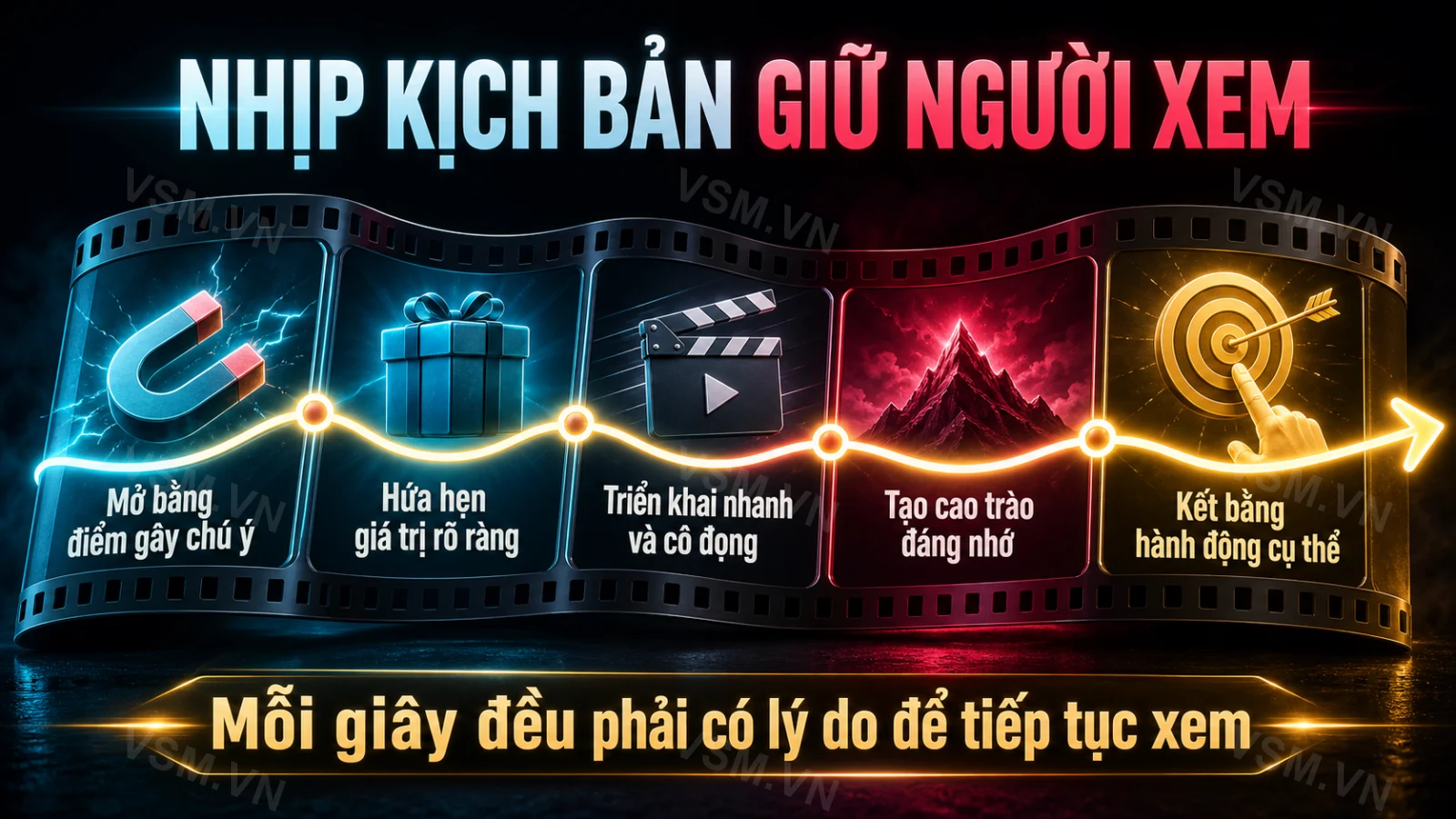
The Standard Script Structure for Short-Form Video
1. Hook (0-3 seconds)
As explained above, this is the section that determines your retention rate. Write out 3-5 different hook options for the same piece of content, then pick the strongest one — don't settle for the first line that comes to mind. Remember, the hook is not just spoken words; it can be a compelling visual, a surprising sound, or a combination of elements that immediately grabs attention. Think about what visual element best complements your verbal hook.
2. Main Content (3-40 seconds)
This is where you deliver value — knowledge, entertainment, emotion, or a story. The "one video, one core idea" rule keeps your content from feeling scattered. Break it into small "beats" — a new highlight every 3-5 seconds, whether that's a line of dialogue, a new shot, or an effect — to sustain attention, since TikTok viewers' brains are already wired for fast cuts. Use on-screen text to reinforce key points, and dynamic camera movements or cuts to keep the visual flow engaging. Avoid long, static shots or overly complex explanations. Simplicity and clarity are key.
Actionable Tips for Main Content Delivery:
- Pacing is paramount: Speak at a moderate to fast pace, but ensure clarity. Use pauses strategically for emphasis, not just to catch your breath.
- Visual variety: Don't just talk to the camera. Incorporate B-roll footage, screen recordings, text overlays, graphics, and even subtle motion in the background.
- Show, don't just tell: If you're explaining a process, demonstrate it. If you're talking about a product, show it in use.
- Storytelling through beats: Even factual content can be framed as a mini-story. Introduce a problem, explain the steps to solve it, and show the resolution.
- Keep it concise: Every word and every shot should serve a purpose. Ruthlessly edit out anything that doesn't add value or move the narrative forward.
3. The Climax or Twist
Videos that get replayed often have an unexpected detail placed in the middle or near the end, which makes viewers watch again to fully understand it or to confirm what they just saw was real. This same twist also drives shares, since viewers want to send it to friends so they can be surprised together. This could be a surprising revelation, a funny punchline, an unexpected outcome, or a clever demonstration of a technique. The key is to deliver something memorable that defies initial expectations.
Examples of Climax/Twist:
- Educational content: After explaining a complex concept, reveal a simple, unexpected shortcut or a common misconception that everyone believes.
- DIY/Tutorial: Show the finished product, but then reveal a unique, unconventional tool or method used that viewers wouldn't expect.
- Storytelling: Build up a narrative, then deliver a sudden plot twist or an ironic outcome.
- Comedy: A seemingly mundane situation escalates into an absurd or unexpected comedic conclusion.
Strategically placing this element encourages not just a single watch, but multiple viewings, significantly boosting your watch time and replay rate – critical signals for the TikTok algorithm.
4. Call to Action (CTA)
End the video with a specific call to action: follow for part two, drop a comment, save it for later, or check out a related product or service. The more specific the CTA, the higher your conversion rate into real engagement. Avoid vague CTAs like "like and subscribe." Instead, guide your viewers clearly.
Effective CTA Strategies:
- Engage with a question: "What's your biggest struggle with [topic]? Let me know in the comments!"
- Drive to another platform: "Want the full tutorial? Link in bio!" (Ensure your profile link is updated).
- Encourage saving: "Save this video so you don't forget these tips!" This is powerful for educational content.
- Prompt sharing: "Tag a friend who needs to see this!"
- Create anticipation: "Follow for part 2 where I reveal the secret ingredient!"
- Direct to product/service: "Check out my [product/service] – link in bio!"
A strong CTA capitalizes on the viewer's engagement from the main content and directs their energy into a measurable action, contributing to your channel's growth and overall goals.
Script Formats That Have Proven Themselves
Not every script needs to be invented from scratch. A handful of formats have repeatedly proven they can drive high view counts:
- Personal storytelling: tell a true story with a climax and a takeaway, building a strong emotional connection. Authenticity resonates deeply with TikTok audiences. Share a relatable experience, a challenge you overcame, or a surprising anecdote.
- List format: "5 mistakes when..." or "3 ways to...", which is easy for viewers to digest and gives them a reason to watch through the whole list. Each point can be a "beat" in your script, keeping the pace moving.
- Before-and-after: shows a clear transformation, and works especially well for beauty, fitness, education, and business content. The visual impact of a transformation is incredibly powerful and inherently curiosity-inducing.
- POV (point of view): puts the viewer into a specific situation, increasing immersion and making it easy to go viral within audiences who share the same experience. Examples include "POV: you're trying to explain TikTok to your parents" or "POV: you just discovered this life hack."
- Reaction: commenting on or reacting to a trend or hot piece of content, riding the existing search volume of the original topic. This taps into established interest and can quickly gain traction. Make sure your reaction adds value or a unique perspective.
- Tutorial/How-to: "How to tie a perfect knot," "Quick recipe for..." These formats provide direct utility and are often saved for later reference.
- Myth vs. Fact: Debunking common myths or revealing surprising truths about a topic. This creates immediate intrigue and positions you as an authority.
- Day in the Life/Vlog Snippets: Offering a brief, engaging peek into your daily routine, work, or hobbies. These build connection and relatability.
Rotating between several script formats instead of repeating a single formula also helps your channel avoid algorithmic "fatigue" from content that looks too similar over time.
Choosing the Right Format for Your Content
The best script format depends on your content's goal and your niche. For instance, a fitness influencer might leverage "Before-and-After" for client transformations, "List Format" for workout tips, and "POV" for relatable gym struggles. A chef might use "Tutorial" for recipes, "Myth vs. Fact" for cooking misconceptions, and "Personal Storytelling" about their culinary journey. Understanding your audience and what kind of value they seek will guide your format choice. Experiment with different formats and analyze your TikTok analytics to see which ones perform best for your specific audience.
From a Viral Script to Real Engagement: Don't Skip the Warm-Up Phase
A great script gives a video the potential to trend, but that potential still needs to be "primed" correctly in the first few hours after posting, since this is the window where TikTok's algorithm measures early signals to decide whether to push your video to a wider audience. Early, steady likes are one of the most important of those signals. Many creators pair a well-crafted script with a TikTok likes boost service right after posting, so the video builds a solid engagement base that gives the algorithm momentum to keep distributing it to new pools of potential viewers. It's how many accounts shorten the "warm-up" period for new content instead of leaving everything to natural luck.
Alongside likes, views are another metric worth tracking in parallel, since they show whether your script is actually holding viewers' attention. If you want a more structured approach to growing this metric, check out our guide on how to increase TikTok views effectively and pair it with your scripting strategy, so your video benefits from both strong content and stronger distribution.
Leveraging Early Engagement for Algorithmic Momentum
The first 30-60 minutes after posting are crucial. TikTok's algorithm acts like a gatekeeper, testing your content with a small batch of viewers. If these early viewers respond positively (high watch time, likes, comments, shares), the algorithm interprets this as a signal of quality and pushes your video to progressively larger audiences. This is where the concept of a "warm-up phase" becomes critical. A video with a strong script that naturally encourages watch time, combined with an initial boost of engagement, can significantly amplify its reach. This isn't about tricking the algorithm, but rather giving genuinely good content the initial push it needs to overcome the platform's vast competition and get seen by its intended audience. It's similar to how a new product needs initial marketing to get off the ground, even if it's an excellent product.
Precautions and Risks to Avoid When Writing Your Script
Writing for high view counts doesn't mean chasing every trick regardless of the consequences. Keep these safety principles in mind:
- Don't use sensational, misleading content: a curiosity-driven hook is good, but if the payoff doesn't match what was promised, your drop-off rate will spike and hurt your channel's quality score in the long run. This can lead to shadowbanning or reduced reach.
- Avoid audio and image copyright violations: prioritize tracks from TikTok's own sound library or properly licensed music so your video isn't restricted from distribution. Using trending sounds from the library can also significantly boost visibility, but always ensure they are available for commercial use if you are a business account.
- Don't overdo artificial engagement: pairing an early engagement boost with genuinely valuable content is fine, but keep engagement rates proportional to average watch time, since an unusual ratio can flag your account for review. Authenticity is key for long-term growth.
- Check that the length fits the content: a video that's too short can feel thin on information, while one that's too long risks losing viewers midway if the pacing isn't engaging enough. Aim for the sweet spot where you deliver your message fully without any unnecessary filler.
- Adhere to TikTok's Community Guidelines: Be aware of what content is prohibited, including hate speech, graphic violence, illegal activities, or promoting self-harm. Violations can lead to video removal, account suspension, or even permanent bans.
- Protect privacy: Never share sensitive personal information about yourself or others in your scripts or videos.
Maintaining Account Health and Long-Term Growth
Your goal on TikTok should be sustainable growth, not just a single viral video. Consistently adhering to these precautions builds a strong, trustworthy presence on the platform. Accounts that prioritize quality, authenticity, and community guidelines are rewarded by the algorithm over time. A single viral video from a misleading script might give you a temporary spike, but it won't build a loyal audience or a healthy account standing. Think of your script as the foundation of your content house; a strong, ethical foundation ensures the house stands for a long time.
Manual Scriptwriting vs. Using AI Tools: A Comparison
Many creators today combine both approaches to save time. Writing scripts by hand allows for a high degree of personalization, matching your channel's own tone and stories, but it takes time to brainstorm hooks and structure. Meanwhile, idea-generation tools — AI-suggested hooks, topic-based outlines — cut down on ideation time, which is especially useful when you need to publish content daily. A balanced approach is to use a tool to quickly sketch 3-5 script directions, then pick the best one and rewrite it in your own natural voice to keep it authentic — a quality that both the algorithm and viewers reward over the long run.
Integrating AI into Your Scriptwriting Workflow
Here's a step-by-step approach to using AI effectively without losing your unique voice:
- Brainstorm Initial Ideas: Start with your core topic or message.
- AI for Hook Generation: Feed your topic into an AI tool (e.g., ChatGPT, Jasper AI) and ask it to generate 5-10 different hooks (question, counter-intuitive, direct-benefit, etc.) tailored for TikTok.
- AI for Outline/Structure: Ask the AI to create a brief outline for a 30-second TikTok video based on your chosen hook and core idea, including suggestions for main points and a CTA.
- Human Refinement and Personalization:
- Review the AI-generated hooks and outline. Select the strongest ones.
- Rewrite the chosen elements in your authentic voice. Inject your personality, specific anecdotes, and unique phrasing.
- Add specific visual cues, sound effects, or on-screen text ideas that an AI might not capture.
- Ensure the twist or climax is genuinely surprising and fits your content style.
- Craft a specific, actionable CTA that aligns with your channel's goals.
- Practice and Adjust: Read the script aloud. Does it sound natural? Is the pacing right? Make any final tweaks before filming.
This hybrid approach allows you to leverage AI for speed and ideation while retaining the human touch that makes your content unique and engaging.
Frequently Asked Questions
How many lines should a TikTok video script have? There's no fixed number, but for a 15-30 second video, 5-8 lines covering the hook, 2-3 main points, and the CTA is usually enough. Avoid over-scripting, or the delivery ends up sounding stiff on camera.
Do I need to film exactly 100% according to the written script? Not necessarily. The script is a skeleton to keep your pacing and message on track, but you can adjust the wording on camera to sound more natural, as long as you keep the hook-content-CTA structure intact.
Why does a video that follows the formula still not get many views? Beyond the script itself, factors like posting time, audio and visual quality, early engagement levels, and relevance to current trends all have a major impact on whether the algorithm distributes your video widely.
Should I copy the script from another viral video? You can reference the structure and hook formula, but adapt it to your own story, product, or perspective to avoid duplicate content, since TikTok prioritizes distributing original, fresh content.
How often should I post new content on TikTok? Consistency is key. While there's no magic number, many successful creators post 1-3 times per day to maintain visibility and keep their audience engaged. Quality should always take precedence over quantity, however.
What's the best way to practice my script delivery? Read your script aloud multiple times, practice in front of a mirror, or record yourself with your phone and watch it back. Pay attention to your tone, pacing, and facial expressions to ensure they match the script's intent.