
What Is a Backlink? Types and How to Build Backlinks Safely in 2026
Vietnamese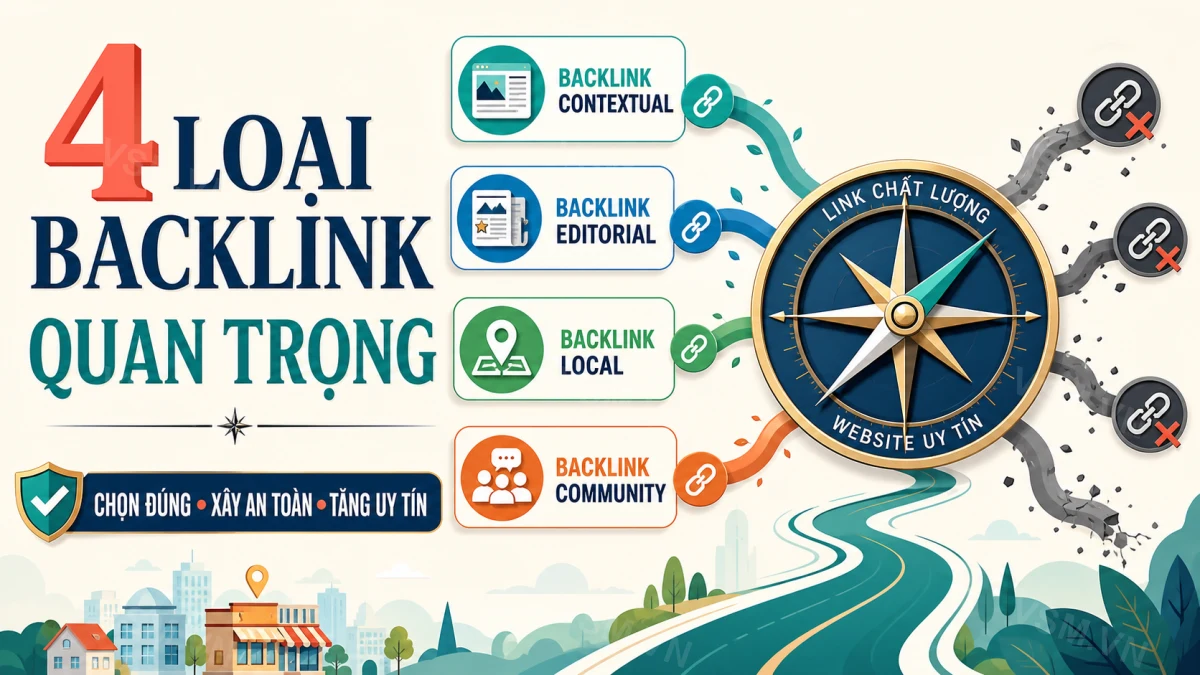
Quick answer: A backlink is essentially a vote of confidence from one website to another, signaling to search engines like Google that the linked content is valuable. In 2026, safe backlink building still prioritizes quality over quantity, focusing on earning links through excellent content, guest posting on reputable sites, and building genuine relationships. For example, aiming for just 5-10 high-authority links per month is often more effective than hundreds of low-quality ones.
If you've looked into SEO before, chances are you've come across the term backlink as one of the key factors that determines how a website ranks on Google. Unlike on-page SEO techniques that you can fully control yourself, backlinks come from outside your website and reflect how much authority other sites are "voting" toward your content.
The catch is that not all backlinks carry the same value, and building backlinks the wrong way can actually get your website penalized by Google instead of helping it grow sustainably. This article breaks down what a backlink is, the most common ways to classify backlinks, and how to build backlinks safely in 2026.
What Is a Backlink?
A backlink (also called an inbound link) is a link placed on another website that points back to your site. When a search engine crawls the web and finds that Page A links to Page B, it treats this as a signal that Page B's content is valuable enough for Page A to send its readers there.
Google uses the number, and more importantly the quality, of backlinks as one of the core factors in its ranking algorithm, an approach that traces back to the original PageRank model. A website that earns backlinks from reputable, topically relevant sources is generally seen as more trustworthy, which gives it a better chance of ranking higher on the search results page.
Why Do Backlinks Matter for SEO?
Backlinks aren't just a ranking signal, they also bring several practical benefits to your website:
- Boost authority for both your domain as a whole and individual pages in the eyes of search engines.
- Help Google crawl and index new content faster, especially for pages that don't yet have many internal links.
- Drive referral traffic directly from readers of the site hosting the link.
- Improve rankings for competitive keywords that on-page optimization alone can't win.
- Build brand awareness by getting your business mentioned across multiple websites, publications, and relevant communities.
That said, backlinks are just one piece of the overall SEO puzzle. For a broader view of the factors you need to optimize in parallel, check out our guide on what comprehensive SEO involves and what SEOs actually need to do to build a strategy that balances on-page, off-page, and technical SEO.
Common Types of Backlinks
By Technical Attribute: Dofollow and Nofollow
A dofollow backlink is the default link type, allowing search engines to "follow" it and pass link equity (link juice) to the destination page. This is the type of backlink that has a direct impact on rankings. A nofollow backlink, on the other hand, carries the rel="nofollow" attribute, telling Google not to pass ranking value through that link, even though it can still drive traffic and brand visibility.
Beyond these two, Google also recognizes two additional attributes: rel="sponsored" for paid or advertising links, and rel="ugc" for links created by users themselves, such as in comment sections or forums.
By Source
- Natural (editorial) backlinks: earned when another website voluntarily cites or references your content without being asked.
- Manually built backlinks: obtained through proactive efforts such as guest posting, outreach, or link partnerships with businesses in the same field.
- Self-created backlinks: links you place yourself on forums, blog comments, social media, or business directories.
By Relevance and Quality
A single backlink from a website in the same niche, with real traffic and a strong Domain Rating or Domain Authority, is usually worth far more than hundreds of backlinks from unrelated, low-traffic sites, or ones that have been flagged for spam by Google. This is exactly why SEO experts consistently recommend prioritizing quality over quantity.
How to Build Backlinks Safely in 2026
Building backlinks safely means growing your link profile naturally and in a controlled way, focused on real value for users rather than chasing volume in a short period of time. Here are the methods considered most sustainable:
- Create linkable assets: in-depth articles, original data and statistics, free tools, and detailed guides are the types of content people naturally want to cite.
- Do guest posting the right way: write quality content for reputable, industry-relevant websites instead of mass-publishing on a large number of low-quality sites just to grab a link.
- Digital PR and media relations: proactively pitch exclusive data or insights to news outlets and industry publications to earn natural mentions and links.
- Broken link building: find broken links on relevant websites and suggest replacing them with a link to your equivalent content.
- Links from reputable directories and business profiles: list your business on platforms like Google Business Profile and vetted industry directories to earn quality backlinks while supporting local SEO.
- Partner with a specialized backlink provider: if your business lacks the time, staff, or relationships with quality websites to build links in-house, consider working with a professional backlink building service that follows a safe, Google-compliant roadmap instead of chasing inflated numbers.
Risks and Pitfalls to Avoid When Building Backlinks
Since Google's Penguin algorithm updates, over-relying on low-quality backlinks can get a website heavily penalized, even wiping out rankings it took years to build. Watch out for these risks in particular:
- Unnatural backlink growth: a sudden spike in backlinks over a short period is easily flagged by Google's systems as manipulative.
- Keyword-stuffed anchor text: repeating the exact same keyword phrase across most of your backlinks is a clear sign of unnatural SEO, so diversify your anchor text in reasonable proportions.
- Backlinks from low-quality Private Blog Networks (PBNs): networks of websites built purely to trade links, with no real content or traffic, carry high risk once Google detects them.
- Links from websites that violate Google's policies: pages with spammy, gambling, or unrelated adult content can drag down the site receiving the link.
- Neglecting your backlink profile: you need to review it regularly to spot and disavow harmful links pointing to your site that you never asked for.
Natural Backlinks vs. Actively Built Backlinks
Natural backlinks have the advantage of being completely safe from an algorithmic standpoint, since they form organically, but their downside is that you have little control over timing, volume, or pace, which makes them better suited to brands that already have strong recognition. Actively built backlinks, on the other hand, when executed correctly and with a focus on quality, help businesses shorten the time it takes to build authority and stay more in control of their overall SEO timeline. The key isn't choosing one approach over the other, it's making sure every backlink you earn, whether natural or actively built, comes from a reputable source and delivers real value to users.
Strategies for Earning High-Quality Backlinks
Leveraging Content Marketing
One of the most effective strategies for gaining high-quality backlinks is through content marketing. By producing informative, engaging, and original content, you naturally encourage other websites to link back to your resources. Here are some actionable steps:
- Develop cornerstone content: Create comprehensive resources on core topics relevant to your industry. For example, a detailed guide or eBook can serve as a reference point that others would want to link to.
- Use infographics: Visual content such as infographics are highly shareable. Create infographics that simplify complex data and encourage others to embed them on their sites with a link back to your original post.
- Publish case studies: Real-world examples provide valuable insights that attract links. Share your successes and learning experiences in a case study format.
Building Relationships
Networking and building relationships with key figures in your industry can open doors to natural backlink opportunities:
- Engage with influencers: Connect with influencers in your field and collaborate on content, interviews, or podcasts that include backlinks to your site.
- Join industry forums and groups: Engage in discussions where you can share your expertise and occasionally link back to your site when it adds value to the conversation.
- Participate in webinars and events: Hosting or speaking at industry events can lead to mentions and backlinks from event organizers and participants.
Tracking and Measuring Backlink Performance
Understanding how your backlinks perform is crucial for refining your strategy and maximizing SEO benefits. Here's how you can effectively track and measure backlink performance:
Use SEO Tools
Several SEO tools can help you monitor backlinks:
- Google Search Console: Provides insights into links to your site, showing which pages attract the most backlinks.
- Ahrefs and SEMrush: Offer comprehensive backlink analysis, allowing you to see new and lost backlinks, domain authority, and much more.
Analyze Traffic and Conversions
Beyond just having backlinks, it's important to assess the quality of traffic they bring:
- Referral traffic analysis: Use Google Analytics to track how much traffic comes from referring sites and which backlinks drive the most engaged visitors.
- Conversion tracking: Determine which backlinks lead to conversions, whether that's a sale, sign-up, or another key metric for your business.
Frequently Asked Questions
Should I prioritize dofollow or nofollow backlinks? Build both in a natural ratio. Dofollow backlinks pass ranking value directly, while nofollow links still help with traffic, brand visibility, and creating a diverse, natural-looking link profile that avoids looking manipulative.
How many backlinks do I need to rank on the first page of Google? There's no fixed number, since it depends on keyword competitiveness and the quality of backlinks your competitors already have. A handful of high-quality backlinks from reputable, relevant sites can outperform hundreds of low-quality ones.
Does buying backlinks violate Google's policies? Google discourages buying and selling links to manipulate rankings and can penalize sites it catches doing so. It's better to build links transparently, focusing on content and genuine partnerships rather than blatant, uncontrolled link buying.
How long does it take for backlinks to affect rankings? It typically takes anywhere from a few weeks to a few months for Google to crawl, evaluate, and reflect a backlink's value in your rankings, depending on crawl frequency, the authority of the linking site, and how competitive your target keyword is.
Are backlinks from social media useful? While social media links are typically nofollow and don't pass direct SEO value, they can generate significant referral traffic and increase content visibility, indirectly supporting your backlink strategy.