
What Is Local SEO? Secrets to Ranking Your Business on Google Maps in 2026
Vietnamese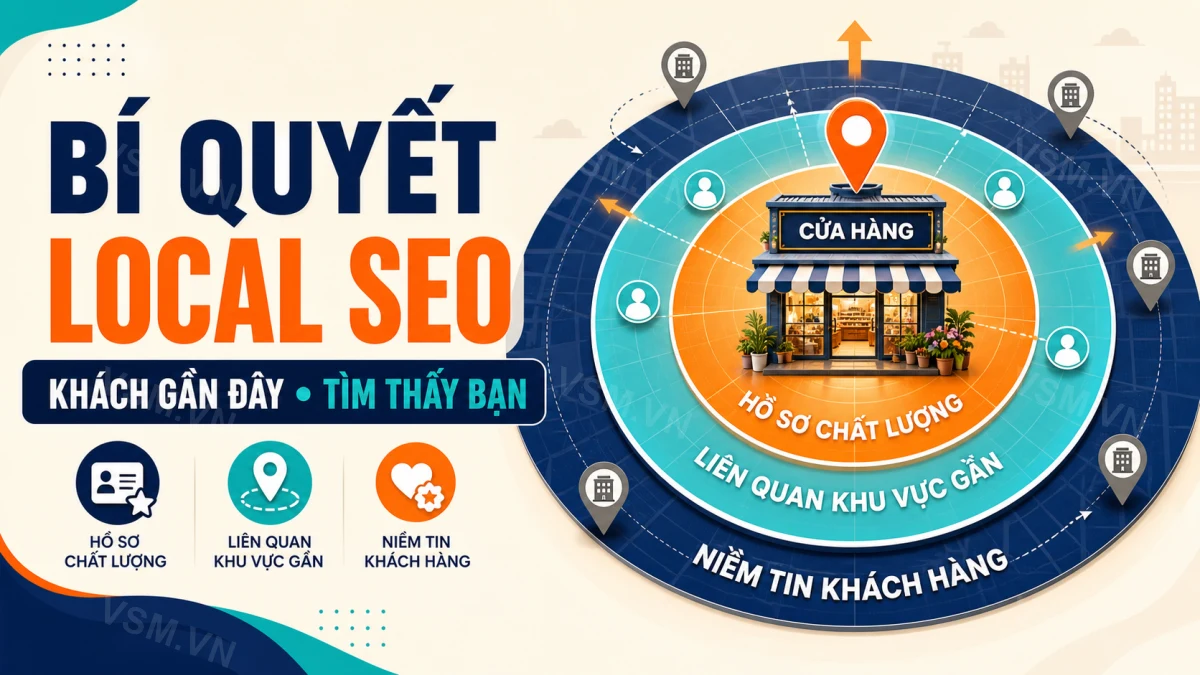
Quick answer: Local SEO in 2026 will heavily emphasize hyper-personalized, proximity-based ranking signals. Businesses need to optimize their Google Business Profile with precise service areas and relevant categories, ensuring consistent NAP data across all online directories. User-generated content, particularly reviews with local keywords, will significantly influence visibility. Expect AI to play a larger role in understanding nuanced local search intent, making a mobile-first, voice search-optimized strategy crucial for ranking on Google Maps.
If you've ever typed "coffee shop near me" or "trusted auto repair District 7" into Google and instantly seen a map pop up with three highlighted results and star ratings, that's Local SEO at work. It's the branch of SEO focused on getting a business to appear front and center when users search for location-based products or services - right when a customer is standing near your store and ready to make a decision within minutes.
"Near me" searches keep climbing every year, and Google increasingly prioritizes results based on the searcher's location. That makes mastering Local SEO practically a survival requirement for any business with a physical location - restaurants, clinics, salons, retail stores, service offices, and more. This article will help you understand what Local SEO really means, learn the ranking factors behind Google Maps, and get a practical roadmap for reaching the top in 2026.
What Is Local SEO?
Local SEO is a set of optimization techniques that help a website and business profile stand out in location-based search results, most notably the "Local Pack" - the three map-pinned results that appear at the top of the page when someone searches for a nearby service. Unlike comprehensive SEO, which targets broad organic traffic, Local SEO zeroes in on nearby customers who are ready to buy right now, which is why its conversion rate into real customers tends to be significantly higher.
Local SEO rests on three main pillars: your Google Business Profile (formerly Google My Business), the consistency of your business information across the internet, and the authority reflected in your reviews and local backlinks.
Why Local SEO Matters More Than Ever in 2026
Multiple studies on search behavior show that nearly half of all Google queries carry local intent, and most users take action - calling, visiting, or placing an order - within 24 hours of finding a suitable business. Here are a few reasons Local SEO keeps growing in importance:
- Smartphone users are searching "near me" more and more, especially in food and beverage, healthcare, beauty, and repair services.
- Google Maps has become a discovery channel for finding new businesses, not just a tool for directions.
- Competition within the Local Pack is generally less fierce than for nationwide organic keywords, making it a good fit for small and medium businesses with limited budgets.
- Competitors in your own area are already investing heavily in this space - fall behind, and you risk losing customers on your own home turf.
The Ranking Factors Behind Google Maps
Google has stated that it ranks Local Pack results based on three main criteria: relevance, distance, and prominence.
Relevance
Your business profile needs to match the searcher's intent precisely: the correct business category, a clear service description, and complete product information with genuine photos.
Distance
Google favors businesses closest to the searcher's location (or the area specified in the query), which is why an accurate address and correctly pinned map coordinates are non-negotiable.
Prominence
This is the factor a business can influence most directly. It includes the number and quality of reviews, your average star rating, backlinks from authoritative sites, how often you're cited across local platforms, and how actively customers engage with your profile.
Step-by-Step Guide to Optimizing Local SEO for Google Maps
Here's a process many businesses have used successfully to improve their local rankings sustainably:
- Verify and optimize your Google Business Profile: Fill in your complete name, address, and phone number (NAP), business hours, the correct category, and a description that naturally includes relevant keywords.
- Keep your NAP information consistent everywhere: Your website, social media, and business directory listings all need to match exactly on name, address, and phone number so Google can trust the data.
- Manage customer reviews consistently: Proactively ask for reviews after every transaction and respond to all of them, including negative ones, in a professional manner to boost your prominence.
- Build local backlinks and citations: List your business on reputable directories, partner with local publications, and connect with industry associations to strengthen regional trust signals.
- Update photos and posts regularly: Google Business Profile lets you post updates much like a mini social feed, keeping your profile active and encouraging engagement.
- Optimize landing pages for local keywords: If you operate multiple branches, each one should have its own page naming its specific location instead of lumping everything into a single general page.
The Role of Google Reviews in the Local Pack Ranking Algorithm
Of the three ranking factors above, prominence is the one most often overlooked, even though it has an enormous impact on customer decisions. A business with a 4.8-star rating and several hundred reviews will almost always beat a competitor sitting at 3.9 stars, even with comparable quality, simply because users trust the crowd. The trouble is that gathering reviews manually is slow - only a small fraction of customers ever leave one on their own.
That's why many businesses choose to pair their efforts with a professional service to speed up the accumulation of genuine reviews while staying within Google's policies. If you're looking to shorten the time it takes to build credibility for your map listing, VSM's Google Maps 5-Star Review Service can quickly boost both your review count and your average rating, helping your profile climb steadily within the Local Pack instead of waiting passively for customers to leave feedback on their own.
Common Mistakes to Avoid in Local SEO
Local SEO can deliver fast results, but doing it the wrong way carries real risk - Google can penalize or even remove your listing from the map. Here are some common mistakes:
- Keyword-stuffing your business name on Google Business Profile (for example, adding "best restaurant District 1" to your brand name) - this violates policy and can get your listing suspended.
- Creating fake addresses or duplicate listings for the same location to grab multiple spots on the map.
- Buying reviews in bulk from low-quality sources with no genuine account activity, which Google's systems can easily detect and wipe out en masse.
- Ignoring negative reviews, which erodes your credibility score and turns off potential customers.
- Letting your NAP information become inconsistent between your website and other platforms, which lowers Google's confidence in your data.
The safe rule of thumb is to always prioritize quality and authenticity: growth in reviews, backlinks, or engagement should happen naturally and at a reasonable pace, avoiding sudden spikes that could trigger algorithmic suspicion.
How Is Local SEO Different from Comprehensive SEO?
Many business owners confuse Local SEO with comprehensive SEO because both aim to rank on Google. In reality, Local SEO is just one sub-branch, focused specifically on location-based results like the Local Pack and Google Maps, while comprehensive SEO covers the entire ecosystem of keywords, content, technical website factors, and backlinks to grow broad organic traffic without geographic limits. If you want to dominate the map for local foot traffic while also building sustainable nationwide traffic, it's worth running both strategies side by side. You can learn more in our complete guide to comprehensive SEO to plan a sensible budget split between the two approaches.
Actionable Tips for Local SEO Success
To truly excel in Local SEO, here are some actionable tips that can make a significant difference:
- Leverage Local Content Marketing: Create content that resonates with the local community. This could be blog posts about local events, interviews with local influencers, or guides to the area. This not only drives local engagement but also enhances your relevance in the area.
- Engage on Social Media: Regularly post on social media platforms about local events, promotions, or new products. Social signals can indirectly impact your SEO by increasing your brand awareness and driving traffic to your website.
- Utilize Local Schema Markup: Implementing local schema markup on your website helps search engines understand your local business better and can improve your visibility in local search results.
- Host Local Events: Organizing or sponsoring local events can garner attention and generate backlinks from local media or event listings, which boosts your local SEO efforts.
Local SEO Tools and Resources
Leveraging the right tools can streamline your local SEO efforts. Here are some essential tools and resources:
- Google My Business: This is the cornerstone of your local SEO strategy. Regularly update your business information, respond to reviews, and post updates to engage with your audience.
- Moz Local: Helps manage your local listings and ensures your NAP details are consistent across all platforms, preventing any discrepancies.
- BrightLocal: Offers comprehensive local SEO reporting, including rank tracking, citation tracking, and review monitoring.
- SEMrush: While it's a comprehensive SEO tool, SEMrush also offers local SEO insights, helping you analyze competitors and track your local keyword rankings.
Frequently Asked Questions
How long does it take for Local SEO to rank on Google Maps? Typically 4 to 12 weeks, depending on how competitive your industry and area are. Businesses with a newly created profile may need more time to accumulate enough trust signals.
Do I need my own website to do Local SEO? Not necessarily - a Google Business Profile can rank on its own, but a well-optimized website significantly strengthens both the relevance and prominence factors.
Do fake reviews hurt Local SEO? Yes. Google continuously scans for and removes suspicious reviews, and businesses that rely on fake reviews risk ranking drops or profile suspension, so always prioritize genuine, trustworthy review sources.
How should multi-location businesses approach Local SEO? Each branch needs its own separate Google Business Profile with an accurate address. Avoid sharing a phone number or landing page across locations, as that creates confusing location data.
What is the impact of local citations on Local SEO? Local citations are mentions of your business on other websites. They help increase your visibility and signal to search engines that your business is credible and authoritative in your area.