
Why Businesses Should Invest in Professional Social Media Services
Vietnamese
Quick answer: Investing in professional social media services is crucial because it directly impacts brand visibility and client engagement. Experts craft tailored strategies, ensuring your message reaches the right audience at optimal times, like during peak evening hours. This boosts brand recognition and drives traffic, potentially increasing lead generation by over 30% within the first six months. It also frees up internal resources, allowing your team to focus on core business operations while professionals manage your online presence effectively.
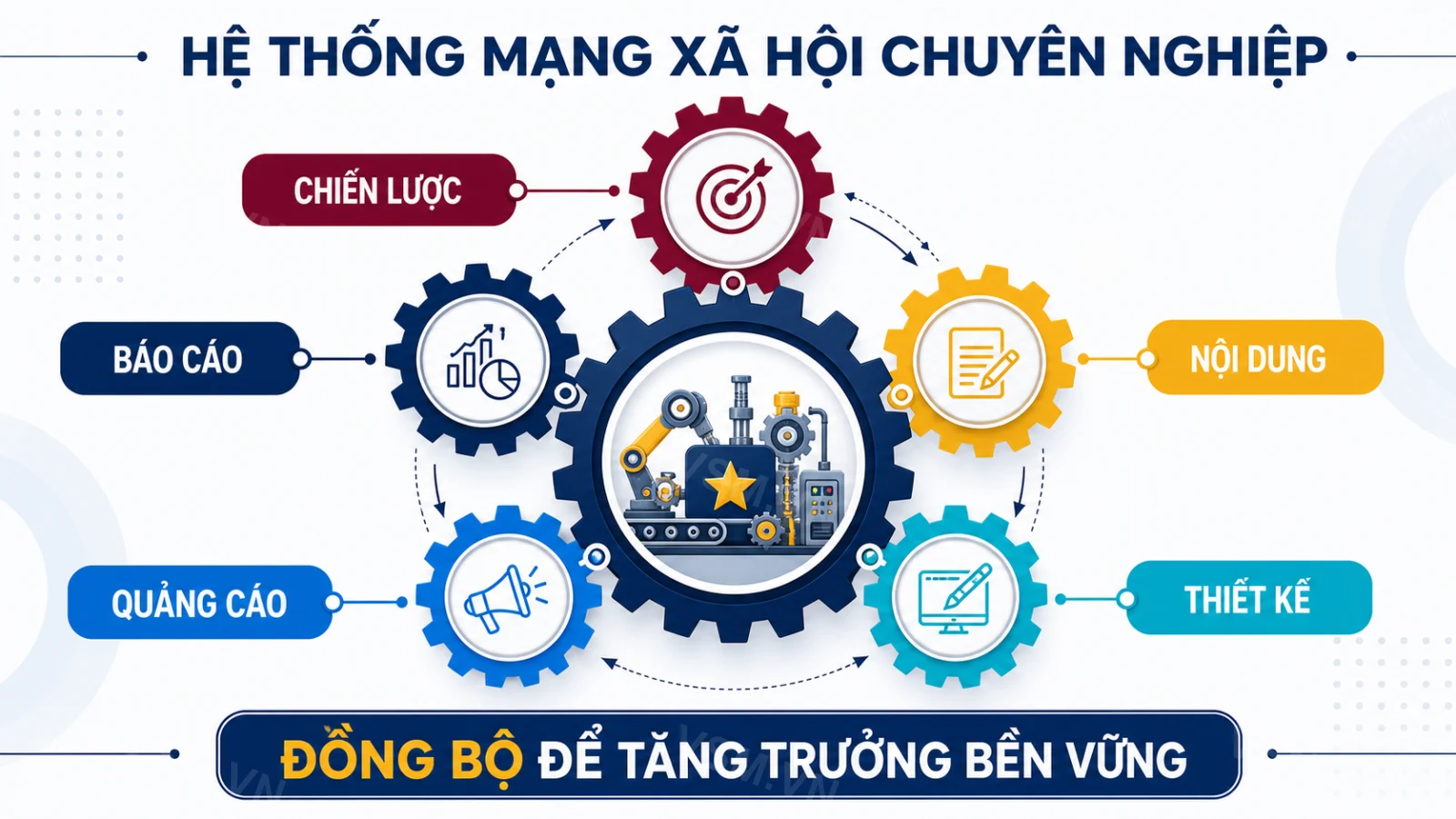
In the context where Vietnamese users spend an average of over two hours daily on platforms like Facebook, TikTok, Instagram, or Zalo, investing in professional social media services is no longer a 'nice to have' but a near-mandatory requirement for any business aiming to survive and thrive in today's competitive digital environment. From small shops to large-scale enterprises, all need a robust social media presence to reach the right customers at the right time with the right message.
However, many businesses still treat social media as a 'side job,' assigning it to employees without a clear strategy, leading to disjointed content and unmeasurable investment effectiveness. This article analyzes why partnering with a professional unit offers superior value compared to DIY approaches, along with essential criteria for choosing a long-term partner.
Social Media Has Become a Core Business Channel, Not Just for Entertainment
Previously, social media was often seen as a secondary channel, mainly for entertainment or personal interaction. But now, the buying journey for most customers starts with browsing social media: reading reviews, viewing product images, and reading comments before deciding to learn more or make a purchase. This makes a business's fanpage, TikTok channel, or Instagram account the first 'showroom' that customers visit, even before they access the official website.
Due to this crucial role, a poorly invested social media page—low interaction, poor content, delayed responses—can lead customers to underestimate the brand's credibility, regardless of how good the actual product or service is. Therefore, investing methodically in social media is not just about marketing but also about building brand trust.
The Evolving Customer Journey: Social Media at the Forefront
Consider the typical customer journey for a fashion brand. A potential customer might first see an influencer wearing a brand's outfit on Instagram or TikTok. They then visit the brand's profile, scroll through comments for feedback on sizing or quality, and look at other user-generated content. Only after this initial social media vetting might they click through to the official website to explore product details, pricing, and make a purchase. This entire process highlights how social media has become an indispensable touchpoint, often preceding traditional website visits or direct inquiries.
For B2B companies, LinkedIn, while different from consumer platforms, plays a similar role. Potential clients might research a company's profile, look at employee endorsements, and read articles shared by the company before ever reaching out for a consultation. A neglected LinkedIn presence can signal a lack of professionalism or industry engagement.
Specific Benefits of Investing in Professional Social Media Services
Consistently Increase Brand Recognition
A professional team will build a unified brand identity across all platforms: from colors, image styles, tone of voice to posting frequency. This consistency helps customers easily recognize the brand wherever they encounter it, thereby increasing recall and trust over time. Conversely, if left to internal staff without clear direction, content often lacks continuity and can seem unprofessional to viewers.
The Power of Visual and Tonal Consistency
Imagine a local coffee shop. A professional social media team would ensure their Facebook posts, Instagram stories, and TikTok videos all use the same warm color palette, rustic fonts, and a friendly, inviting tone. This consistency makes the brand instantly recognizable, whether a customer sees a sponsored ad, a friend's shared post, or an organic search result. Without this, one platform might feature bright, modern aesthetics while another has a vintage feel, confusing the audience and diluting brand identity. A professional service uses brand guidelines, content calendars, and approval processes to maintain this critical consistency.
Create Sustainable Traffic and Potential Customers
A well-invested fanpage or TikTok channel not only brings likes and follows but also serves as a source of quality traffic to the website or e-commerce store. This type of traffic is highly trusted because users come from recommendations, shares, or organic interactions on social media, rather than mere paid advertising. To delve deeper into how this source of traffic operates and contributes to the overall strategy, you can refer to the article What Is Social Referrer Traffic? How to Boost It in 2025, which analyzes in detail how to optimize this stream of visitors for the business website.
Beyond Vanity Metrics: Driving Conversions
While likes and followers are visible, a professional service focuses on metrics that impact the bottom line. This includes click-through rates (CTR) to your website, lead generation through forms, and direct sales originating from social media campaigns. For instance, a professional team might run a series of Instagram Reels showcasing a product's features, leading viewers to a dedicated landing page with a special discount code. They would then track how many people clicked the link, how many made a purchase, and calculate the return on investment (ROI) for that specific campaign. This level of tracking and optimization is often beyond the scope of an internal team juggling multiple responsibilities.
Support Overall SEO, Increase Trust with Search Engines
Many businesses do not realize that social media activities and SEO are closely related. When a brand is mentioned, shared, and discussed frequently on social media, search engines recognize these as positive brand signals, indirectly supporting natural backlinks and improving click-through rates on search results. Therefore, many businesses choose to integrate social media with comprehensive SEO services to optimize in unison, rather than deploying separately, which disperses effectiveness.
The Indirect SEO Boost from Social Signals
While social media links are typically "nofollow" and don't directly pass "link juice" like traditional backlinks, their impact on SEO is undeniable. Increased brand mentions across social platforms, higher engagement rates on posts, and greater social reach contribute to what search engines perceive as brand authority and relevance. For example, if a company's blog post goes viral on LinkedIn, it might lead to more people searching for that company's name on Google, increasing direct traffic and improving click-through rates for branded search terms. This tells Google that the brand is popular and authoritative, indirectly boosting its search rankings. A professional social media team understands how to create content that encourages sharing and discussion, amplifying these positive signals.
Access to Advanced Tools and Analytics
Professional social media agencies invest in a suite of advanced tools for scheduling, analytics, competitor analysis, and audience research. These tools provide deeper insights into content performance, optimal posting times, audience demographics, and emerging trends that would be expensive and time-consuming for an individual business to acquire and master. This allows for data-driven decisions rather than guesswork, leading to more effective campaigns.
Mitigate Brand Crises and Manage Reputation
In today's interconnected world, a single negative comment or review can quickly escalate into a brand crisis. Professional social media teams have established protocols for monitoring social conversations, identifying potential issues early, and responding promptly and appropriately. They are trained in crisis communication, ensuring that responses are empathetic, professional, and align with brand values, thus protecting the brand's reputation.
Should Businesses Manage Their Own Social Media or Hire Professional Services?
This is a question most small and medium business owners ponder, as both options have their own pros and cons. Here are some key differences to consider:
- Cost: DIY may seem cost-effective initially, but when accounting for training time, management tools, and trial-and-error costs due to lack of experience, the actual total cost is often not cheaper than hiring professional services.
- Expertise: Professional units understand the algorithms of each platform, real-time content trends, and have data from multiple clients to optimize strategies faster.
- Time: Effective social media management requires regular posting, comment responses, and continuous metric tracking—very time-consuming if staff have to juggle multiple tasks simultaneously.
- Scalability: When expanding to multiple platforms or new markets, a professional team has ready processes and personnel to respond much faster than recruiting and training internally from scratch.
For businesses with abundant marketing resources, self-implementation is still feasible. But for most small and medium enterprises, hiring professional services often yields better investment effectiveness within the same budget.
The True Cost of DIY Social Media
Let's break down the "hidden" costs of DIY social media for a small business. If an existing employee, say an office manager, is tasked with social media, their primary duties might suffer. They'll need training on content creation tools (Canva, video editing software), social media best practices, platform algorithms, and analytics. This training costs money and time. Then there's the cost of subscription tools for scheduling (e.g., Buffer, Hootsuite), analytics, and potentially stock photography. More critically, the opportunity cost of ineffective campaigns due to lack of expertise can be immense. Poorly targeted ads, unengaging content, or missed trends can lead to wasted ad spend and lost potential customers. A professional agency, while having a higher upfront fee, often delivers a better ROI by avoiding these pitfalls and achieving results more efficiently.
Specialized Knowledge for Each Platform
Social media isn't a one-size-fits-all endeavor. What works on TikTok (short, engaging videos, trending sounds) is vastly different from what succeeds on LinkedIn (professional articles, industry insights, networking). An internal team might struggle to keep up with the rapid changes in algorithms, content formats, and audience expectations across all relevant platforms. Professional services have dedicated specialists for each platform, ensuring that content is tailored and optimized for maximum impact on Facebook, Instagram, TikTok, Zalo, YouTube, and more.
Considerations When Choosing a Social Media Service Provider
Not every provider suits every business. Before deciding to collaborate, carefully consider the following factors to avoid wasting budget or risking brand reputation:
- Transparency in Methodology: A reputable provider explains clearly how they implement content, interaction, and growth, instead of promising vague 'virtual' numbers.
- Real Case Studies: Request to see completed projects to evaluate the quality of content and the level of actual interaction achieved.
- Clear Reporting and Metrics: Professional services must provide periodic reports with specific metrics like reach, engagement rate, and conversion rates.
- Industry Knowledge: Each field has unique content characteristics and customer behavior, so prioritize providers with experience in similar industries.
- Information Security Policy: Since they are granted account management rights, the service provider must have clear security procedures to avoid the risk of losing fanpage control.
Evaluating a Provider's Transparency
When a provider promises "guaranteed followers" or "viral content," it's a red flag. A transparent agency will explain their strategy: "We will create a content calendar focusing on [X] topics, post [Y] times a week on [Z] platforms, use [A] hashtag strategy, and allocate [B] budget for targeted ads to reach [C] audience segment." They should be able to articulate their approach to content creation, community management, and performance measurement. Ask about their content approval process, their tools for scheduling and analytics, and how they stay updated with platform changes.
The Importance of Industry-Specific Expertise
A social media agency that excels with fashion brands might not be the best fit for a B2B software company. The target audience, content types, and platform priorities are vastly different. An agency with experience in your industry will already understand your customer's pain points, industry jargon, and competitive landscape. This saves significant time in onboarding and strategy development, leading to more relevant and effective campaigns from the outset. Don't be afraid to ask for case studies specifically within your niche.
Practical Steps for Vetting a Social Media Partner
- Define Your Goals: Before approaching any agency, clearly outline what you want to achieve (e.g., increase brand awareness by 20%, generate 50 leads per month, drive 10% more website traffic).
- Request a Detailed Proposal: A good proposal should include their understanding of your business, proposed strategy, content examples, timeline, team structure, and pricing breakdown.
- Check References: Speak to their past and current clients. Ask about communication, responsiveness, ability to meet deadlines, and actual results.
- Review Their Own Social Presence: Do they practice what they preach? Is their own social media engaging, professional, and consistent?
- Discuss Reporting Frequency and Format: Ensure their reporting aligns with your needs and provides actionable insights, not just raw data.
- Clarify Communication Channels: Understand who your main point of contact will be and how often you'll have meetings or check-ins.
Combining Social Media and SEO to Maximize Overall Marketing Effectiveness
A modern marketing strategy rarely relies on just one channel. Social media helps businesses build brand recognition, create interaction, and nurture a loyal customer community; SEO helps businesses appear at the right time when customers actively search on Google. When both channels are invested in synchronously, they complement each other: social media boosts recognition and referral traffic, while SEO retains customers with in-depth, reliable content on the website. This is why forward-thinking businesses often develop these two activities as a unified marketing ecosystem, rather than deploying them separately and lacking connection.
Synergy in Action: A Holistic Marketing Approach
Consider a new product launch for an electronics company. The social media team could create engaging teasers, run contests, and collaborate with tech influencers to generate buzz and excitement, driving massive referral traffic to a specific product page. Meanwhile, the SEO team ensures that product page is optimized with relevant keywords, high-quality content, and technical SEO best practices, so when customers search for "best noise-cancelling headphones 2025" on Google, the company's product ranks high. The social media activity creates initial awareness and demand, while SEO captures the intent of users actively searching for solutions, leading to a powerful, integrated marketing funnel.
Content Repurposing and Distribution
A unified strategy also allows for efficient content repurposing. A comprehensive blog post created for SEO purposes can be broken down into multiple social media snippets, infographics, or short videos. Conversely, engaging social media questions can inspire new blog topics. This not only maximizes the value of each piece of content but also ensures a consistent message across all channels, reinforcing brand authority and expertise.
Data Integration for Smarter Decisions
When social media and SEO data are analyzed together, businesses gain a more complete picture of their customer's journey. Understanding which social media posts drive the most organic searches, or which SEO keywords lead to social shares, allows for continuous optimization of both strategies. This integrated data analysis is a hallmark of sophisticated digital marketing and is often facilitated by professional agencies working in tandem.
The Role of Paid Social and Search
Beyond organic efforts, professional services often integrate paid social media advertising (e.g., Facebook Ads, TikTok Ads) with paid search (Google Ads). Social media ads can target specific demographics and interests to build awareness and generate leads, while search ads capture users with high commercial intent. Coordinating these paid efforts ensures consistent messaging, optimized budget allocation, and a seamless customer experience from initial exposure to final conversion.
For example, a retargeting campaign could show social media ads to users who visited a website after clicking a Google search ad but didn't convert, nudging them towards a purchase. This level of strategic integration is complex and requires specialized expertise across both disciplines.
Why a Unified Strategy is Crucial for Long-Term Growth
In a dynamic digital landscape, relying on a single channel is risky. Algorithm changes on social media platforms or search engines can drastically impact reach and visibility overnight. By diversifying efforts across interconnected channels like social media and SEO, businesses build a more resilient and sustainable online presence. This integrated approach ensures that even if one channel faces headwinds, the others can continue to drive engagement and traffic, fostering long-term brand growth and customer loyalty.
Frequently Asked Questions
Should small businesses invest in professional social media services from the start? Yes. Even with a limited budget, building a proper content foundation and brand identity from the start will save correction costs later and create a competitive advantage sooner compared to competitors who have not yet focused on this channel.
What factors typically determine the cost of professional social media services? Costs depend on the number of platforms deployed, the volume of content to be produced, the desired level of interaction, and the scale of any accompanying advertising campaigns. Businesses should clearly discuss their goals to receive a quote that suits their actual needs.
How long does it take to see results from professional social media services? Interaction metrics and brand recognition typically improve significantly after 1-3 months of consistent deployment, while effects on customer conversion and sales can take 3-6 months to clearly manifest sustainable trends.
Should social media services be combined with SEO simultaneously? Yes, because these two channels complement each other in terms of brand recognition and traffic sources. Simultaneous implementation helps businesses optimize overall marketing budgets rather than investing separately, lacking linkage between channels.
How do professional services handle negative comments or reviews on social media? Professional agencies have clear crisis management protocols. They monitor conversations, identify negative sentiment early, and respond promptly and professionally according to pre-approved guidelines. Their goal is to de-escalate situations, offer solutions, and protect the brand's reputation.
Can I still have input on my social media content if I hire an agency? Absolutely. A good agency will involve you in the strategy and content approval process. They will present content calendars, drafts, and campaign ideas for your feedback and approval, ensuring the content aligns with your brand voice and business objectives.